Archive | May, 2014

Wolf tales

31 May

173F5515

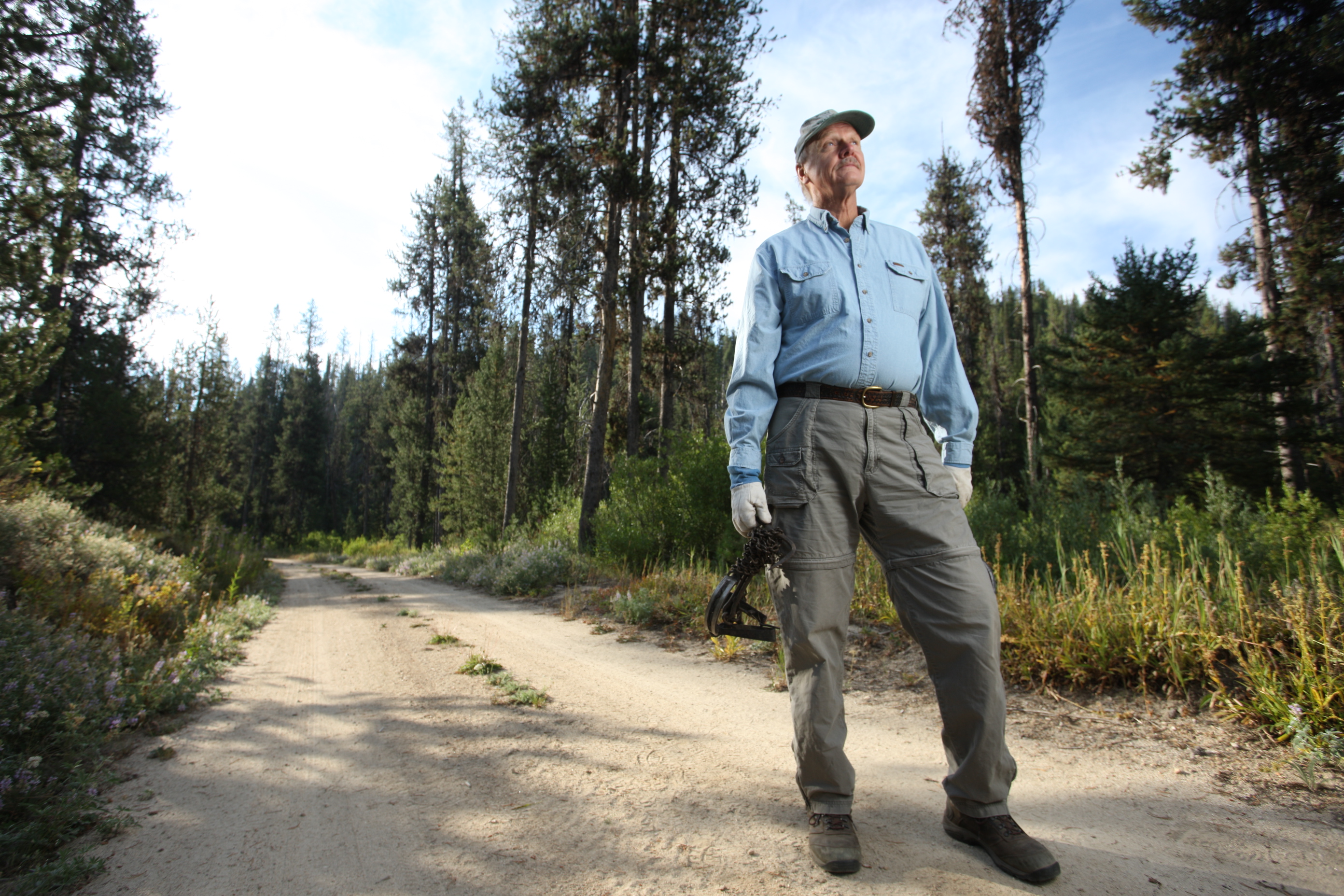
We’re traveling with Carter Niemeyer into prime wolf country. Wolf country as far as you can see.

We’re about 60 miles northeast of Boise, Idaho, in the Edna Creek drainage area of the Boise National Forest.

We stop the truck and get out. Carter looks for wolf tracks on the gravel road. He finds fresh elk prints, coyote scat. But no evidence of wolf activity.

Sometimes it’s a wolf rendezvous here, he says. There will be thousands of wolf tracks on the road.

Carter lets loose a friendly howl. The sound carries for miles. But no response. The large wolf pack is just out of range.

We’ve started our day at 6:30 a.m., but it’s already too late for wolf activity here. Howl at daybreak, Carter says, and the wolves will answer. Canines enjoy howling, he says. They like to whoop it up.

Carter Niemeyer (’70 fisheries & wildlife biology, MS ’73), a 6’6” native of Garner, Iowa, knows wolves. A former government trapper in Montana and wolf recovery coordinator for the U.S. Fish & Wildlife Service in Idaho, Carter helped capture the wolves that were famously introduced in Yellowstone National Park and Idaho in the 1990s.

He’s controversial. He’s outspoken. He’s personally trapped more than 300 wolves: captured them, fitted them with radio collars, checked them for injury, and released them.

He worked in every corner of Montana for 27 years, and he’s been in Idaho for 13. He’s collected so many stories – of people and animals – over the years that friends kept telling him he should write a book.

So in 2010, with the help of his wife and editor, Jenny, Carter published a memoir: Wolfer. The book is filled with tales of growing up in Iowa, learning to trap and skin animals, and working his way through skunks and eagles and foxes and grizzlies before finding his niche with wolves in the Northern Rockies.

The book has sold more than 7,000 copies, Carter says, slightly amazed by this fact. “People love the book,” he says, shaking his head. “They say it’s a page turner.”

“But you can’t make this stuff up.”

Just do it

31 May

KI0A4318

Gina Ambrose had a goal: Run a 26-mile marathon the year she turned 26.

“I’d been tossing around the idea of running a marathon, and I needed a deadline,” Gina said. “When I turned 26, I thought, ‘This is it.’ I moved to Oregon and started training for the Portland Marathon.”

The achievement of her goal gave Gina much more than a pumped-up fitness routine. It allowed her to explore her new city and find hidden gems along the way.

“I like running, and I like exploring my neighborhood,” she said. “It’s really social.”

Gina (’08 marketing, international business, and French) moved to Portland to work at Nike, headquartered in nearby Beaverton, Ore., as part of the marketing team for the website Nike.com.

“It’s fabulous to work at Nike,” she says. “I volunteer to give tours to guests because I love to tell the Nike story.”

Her work focuses on digital marketing and target-market advertising. She says the job is the perfect balance of art and science.

Though she grew up in the small Iowa town of Webster City, Gina says she always liked big cities, and she landed her first job at Gap in San Francisco. But Portland and Nike are the perfect fit for her.

“My dream of dreams was to work for Nike,” she says.

Jet set

31 May

IMG_7500

When Matt England graduated with an aerospace engineering degree in December 2011, he was all set to start his life in the Midwest. After all, he had good job offers from both Caterpillar and John Deere.

But then the Boeing Company “came in at the last second” and gave Matt an opportunity he couldn’t refuse: a chance to move to Seattle, Wash., to work as a flight test engineer.

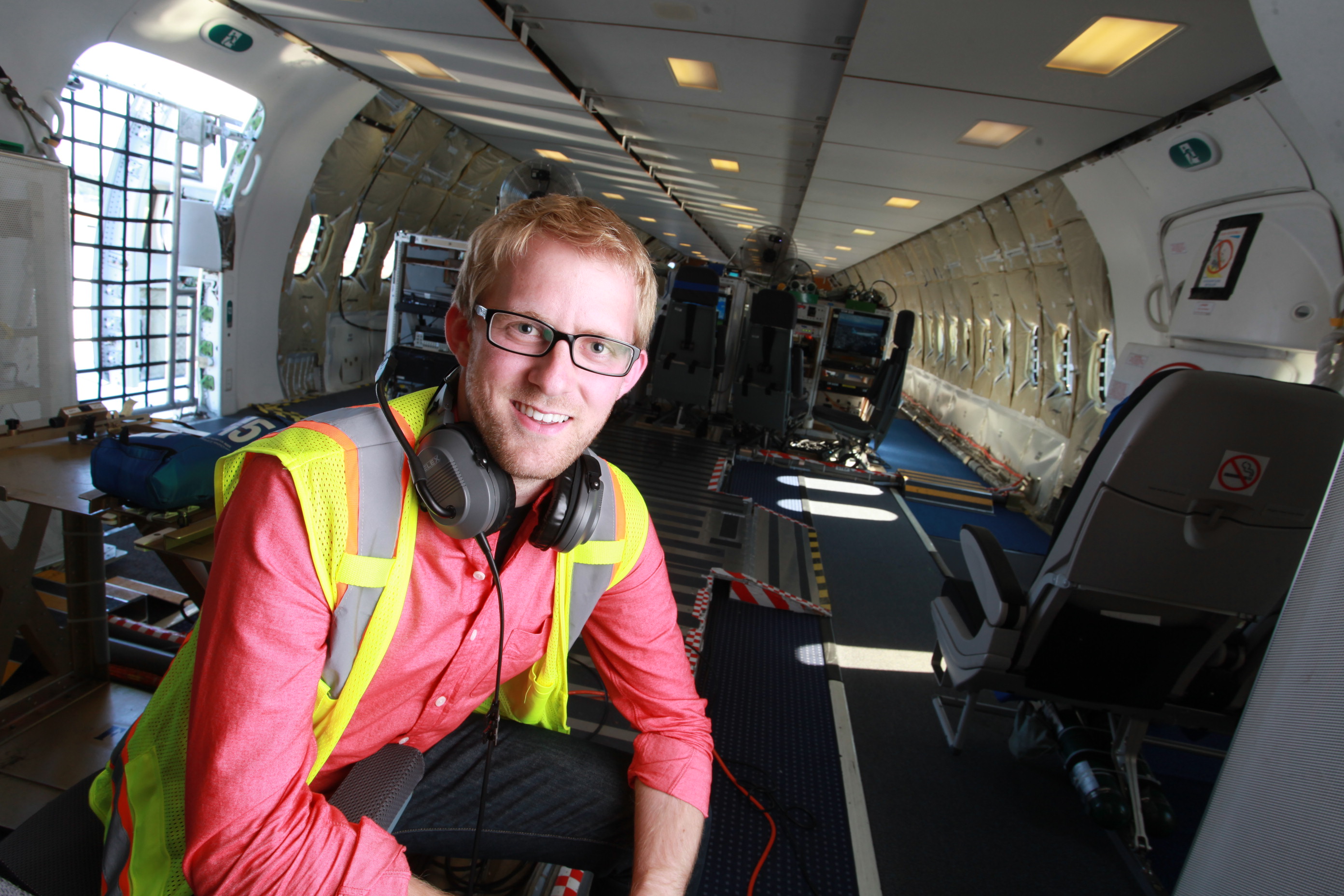
“As a flight test engineer, I get to travel the world testing these magnificent machines,” Matt says. “I’m currently working on ZA005 – a 787 Dreamliner. Some of the flight maneuvers we do include stalls, high-banked turns, and nose-over maneuvers.”

It’s no surprise that Matt ended up here. As a youngster his family took a vacation to Seattle, which included a Boeing factory tour that he declared the “coolest thing in the world.”

Matt does have a desk in a Boeing facility, but when he’s flying, his “office” is a workstation in the 787. Test flights might be as short as half an hour or they could take all day, and Matt is typically part of a 10- to 15-person crew. He’s flown all over the western United States and to Alaska, Hawaii, Puerto Rico, and beyond.

“The coolest thing about being involved in flight test is flying on a brand-new aircraft and getting to experience the future of aviation first-hand,” Matt says.

Matt’s girlfriend, Amy Schwager (’12 graphic design), is a graphic designer in Seattle. Both grew up in small-town eastern Iowa and are embracing the Seattle culture. Matt is president of the ISUAA Club of Seattle, and both are active with ISU alumni events.

A little wine

31 May

173F9382 copy

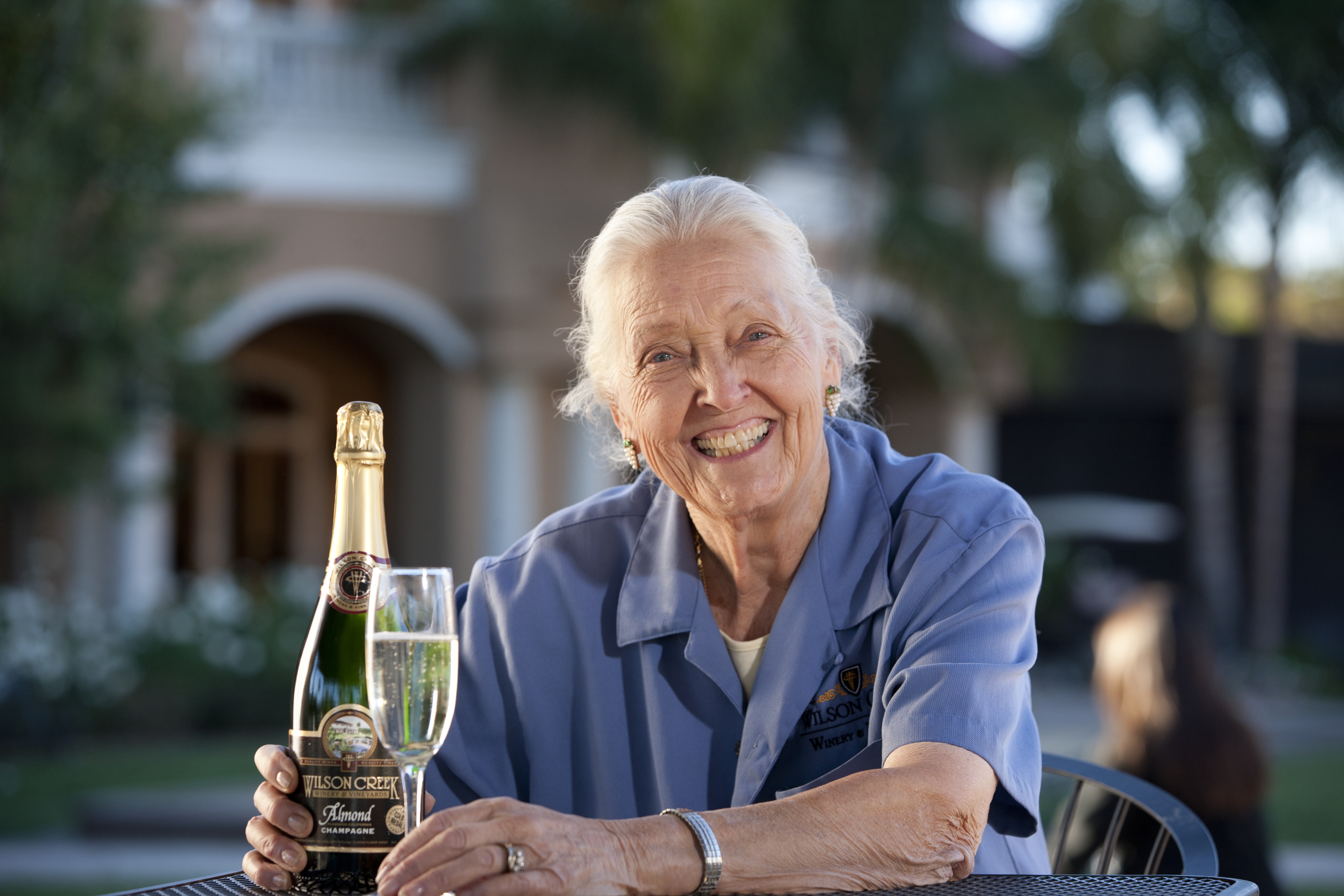
Rosie (Iverson) Wilson’s first response to her son when he suggested she and her husband, Gerry, buy “a little winery” in Temecula, Calif., was, “You’re crazy.”

Rosie and Gerry were living in the Los Angeles area at the time, and Gerry had recently retired.

“The kids thought it would be fun, and we went from there,” Rosie says. That was in 1996. They built the winery while living in a trailer on the property “and eating a lot of peanut butter sandwiches,” opened in 2000, and have been growing ever since. The original staff of eight (“all Wilsons”) became a staff of 172. Twenty acres grew to 93 acres. A restaurant was added in 2008.

Today, on a good weekend, it’s not uncommon for Wilson Creek Winery to welcome 1,000 visitors per day to its tasting room. The restaurant serves an average of 500 people at its Sunday brunch. More than 100 weddings are held each year, plus other events nearly every evening.

When the Wilsons opened in 2000, they were the 12th winery in the Temecula Valley, an up-and-coming wine region located about an hour northeast of San Diego. Now there are 42. It might be easy for Wilson Creek to get lost in the shuffle if it were not for two key things: family and almond champagne.

“Our motto is ‘family first,’” Rosie says. Wilson Creek is first and foremost a family business. On any given day, members of the Wilson family can be found throughout the winery.

As for the almond champagne, that was a little more serendipitous.

“We thought our cabernet would be our signature wine,” Gerry explains. “We developed an almond champagne for weddings, and then we took it out for tastings, fundraisers, and charitable events.”

The almond champagne made Wilson Creek stand out from the other wineries.

“We had no idea what we were doing at first,” Rosie said. “It was, ‘Have almond champagne, will travel.’”

Wilson Creek has a popular wine club and a loyal customer base. Diners rave about the winery’s old-fashioned service and personal attention.

Rosie and Gerry are clearly having a blast with their “little winery” business.

“We’ve been married 59 years,” she says, “and he’s still my best friend.”

Rosie  (’52 child development) grew up in Ames, Iowa. Her father, Prof. C.A. Iverson, was the head of Dairy Industry at Iowa State and was the VEISHEA faculty adviser for 25 years.