Sunshine in a glass

12 Mar

IMG_0846

What could possibly be more “Florida” than orange juice?

The state of Florida produces 67 percent of all U.S. oranges and accounts for 40 percent of the world’s orange juice supply. Next to tourism, citrus production is one of the top moneymakers for the state.

Tropicana buys 30 percent of all oranges grown in Florida. The Tropicana plant in Bradenton, Fla., processes 50 million oranges a day. That translates into a million gallons of orange juice.

Brenda Lanning Marlow (’88 consumer food science) is a manager in manufacturing at Tropicana, where she’s worked in a variety of positions for the past 21 years. She’s a quality control expert, working to roll out new products, keep production costs down, and improve efficiencies in the manufacturing process.

During our visit to the plant in mid-February, Brenda gave Jim and me a tour of just a small part of the huge, 285-acre plant, including the fruit-receiving area where truck after truck filled with fresh-smelling oranges pulled in and dumped their loads.

A Marshalltown, Iowa, native, Brenda is an avid Cyclone sports fan, as evidenced by her office decorated with Iowa State posters and other paraphernalia (“I really didn’t do this for the photos,” she insists. “It always looks like this. Just ask my co-workers.”) She’s also the president of the ISU Alumni Association Club of Tampa.

As we prepared to leave, Brenda gave each of us two cold cartons of orange juice to drink on the road. And then she mentioned, as if it were no big deal, a huge personal accomplishment: She recently lost more than 90 pounds and has begun organizing Weight Watchers meetings for a group of co-workers, resulting in more than 100 pounds of weight loss within the group just over the past few weeks. Wow – that’s  truly impressive leadership.

Brenda is married to Steven Marlow and has two stepchildren, Joshua and Rachel.
A perfect match

4 Mar

IMG_1534

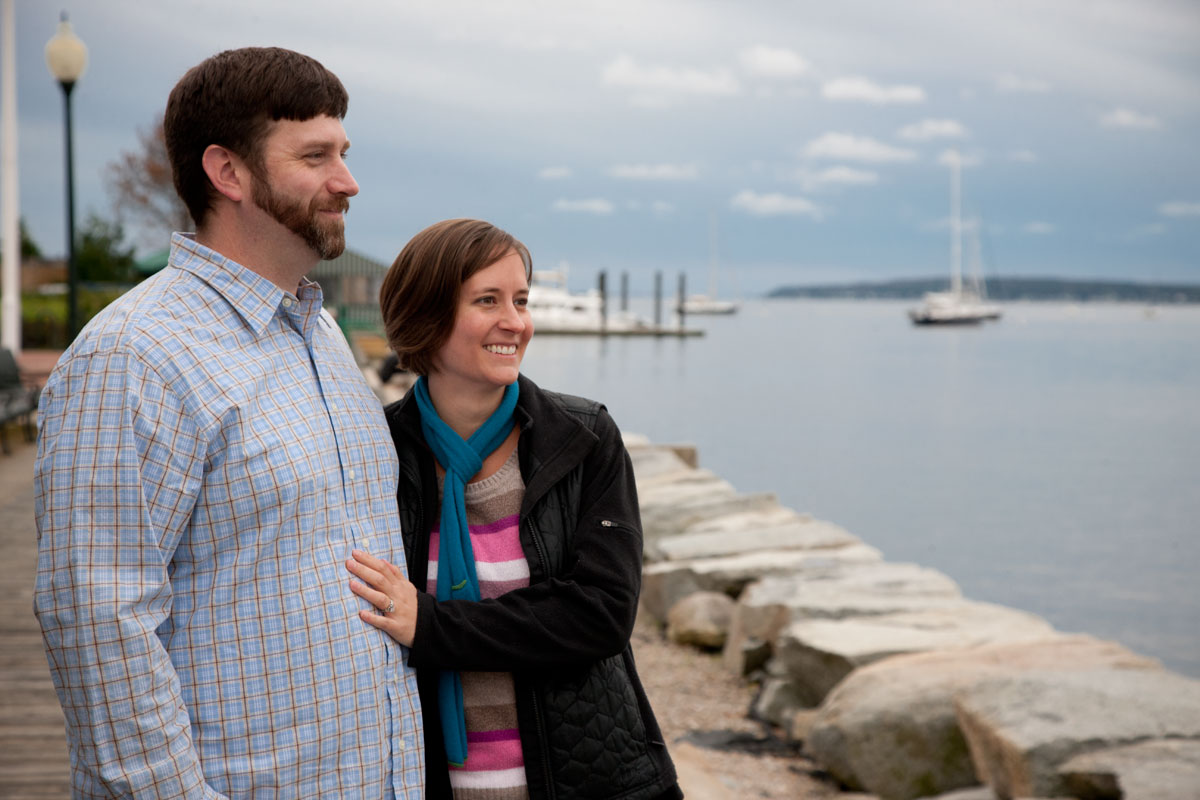
At first glance, Rafael Perez-Micheli and Bridget Moore seem like total opposites.

Bridget (’02 English) grew up in Ames, Iowa, the daughter of “hippie” parents. She was a “nature girl” who loved to get her hands dirty, to go camping, and to crawl under things looking for salamanders.

Rafi, as he prefers to be called, (’97 art & design, ’03 graphic design) grew up in a large city in Puerto Rico, the son of conservative parents. He’d only been to the United States once before enrolling at ISU: to visit Disney World. And he’d never seen snow.

The two met in the unlikeliest of places: Hickory Park Restaurant in Ames. Bridget was an on-again-off-again college student working as a waitress; Rafi was following in his sisters’ footsteps attending Iowa State and was working as a cook.

Their home in Sanford, Fla., is the perfect mix of their backgrounds: Its size, downtown area, and vibe remind Bridget of Ames. The summer heat reminds Rafi of Puerto Rico. They both agree that they “love everything about this town.” Sanford is home to an annual film festival, monthly juried art shows and street parties, funky bars and restaurants, art galleries, theatres, a farmers market, and antiques stores.

“The town is disgustingly cute,” Bridget says, laughing. “It’s an oddball town, with musicians and artists and creatives going in a hipster direction.”

The couple has been together 16 years and married for 10; they moved to Sanford in 2004. Bridget, who has a master’s in English with a technical writing focus from the University of Central Florida, is a proposal development supervisor for Akimeka, LLC, an IT services firm. Akimeka has multiple office locations; Bridget works in the corporate office in Maitland, Fla., just north of Orlando. Rafi is an art director for the Parenting Group at Bonnier Corporation, which is owned by the Swedish Bonnier Group. He works at the Winter Park location of Bonnier Corp.

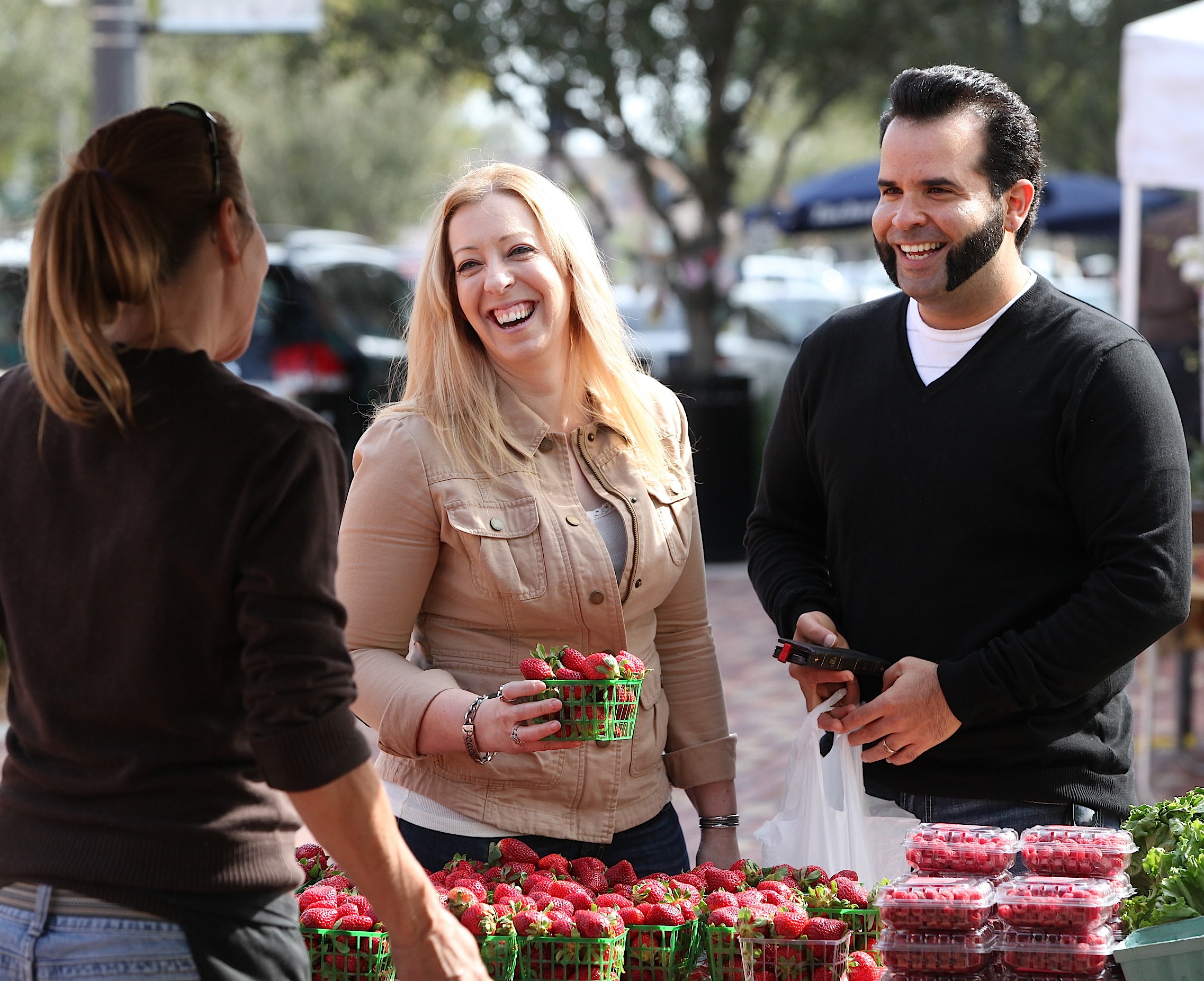
When Jim and I visited them on a Saturday in mid-February, they were shopping for fresh produce at a farmers market in downtown Sanford. It was such a nice change of pace from central Iowa in the winter to see fresh okra, avocadoes, strawberries, cabbage, radishes, beets, and kale. Both Rafi and Bridget eat a healthy diet: Rafi recently ran his first Disney Half Marathon, and Bridget finds a wide variety of gluten-free foods in Sanford’s restaurants, bakeries, and markets.

The Sunshine State

21 Feb

173F1820

Our travels to the state of Florida proved once again that Iowa State has fantastic alumni all across the country. Jim and I are never disappointed and, in fact, nearly always WOWED by the people we have met through our VISIONS Across America project.

IMG_0699On this particular trip, we met Brenda Lanning Marlow (’88 consumer food science), a manufacturing manager at Tropicana and a huge Iowa State fan. In fact, she’s the president of the ISU Alumni Association Club of Tampa. Brenda showed us around the Tropicana plant in Bradenton, in west-central Florida just south of the Tampa/St. Petersburg area. We watched truck after truck filled with Florida oranges pull into the receiving area and dump their loads. Brenda says Tropicana purchases approximately 30% of all oranges grown in Florida. That’s a lot of oranges. Brenda’s office (and Brenda herself) was decked out with Cyclone gear. She says she didn’t do anything special for the photo shoot — she’s just really, really proud to be an Iowa State alum.

IMG_1337We met Rafael Perez-Micheli (’97 art and design, ’03 graphic design) and Bridget Moore (’02 English) in historic Sanford – a community north of Orlando that’s known for its picturesque lakefront as well as its art, theatre, film festivals, food, and antiques. Bridget (an Ames native) and Rafi (originally from Puerto Rico) met in Ames, married more than 10 years ago, and have lived in Sanford since 2004. Rafi is an art director, and Bridget is a proposal manager — and they both totally love living in Sanford, which Bridget says reminds her a lot of Ames. They took us to the marina, to the local farmers market, and to a popular German restaurant: Hollerbach’s Willow Tree Cafe. We had so much fun, we hated to leave.

173F0512

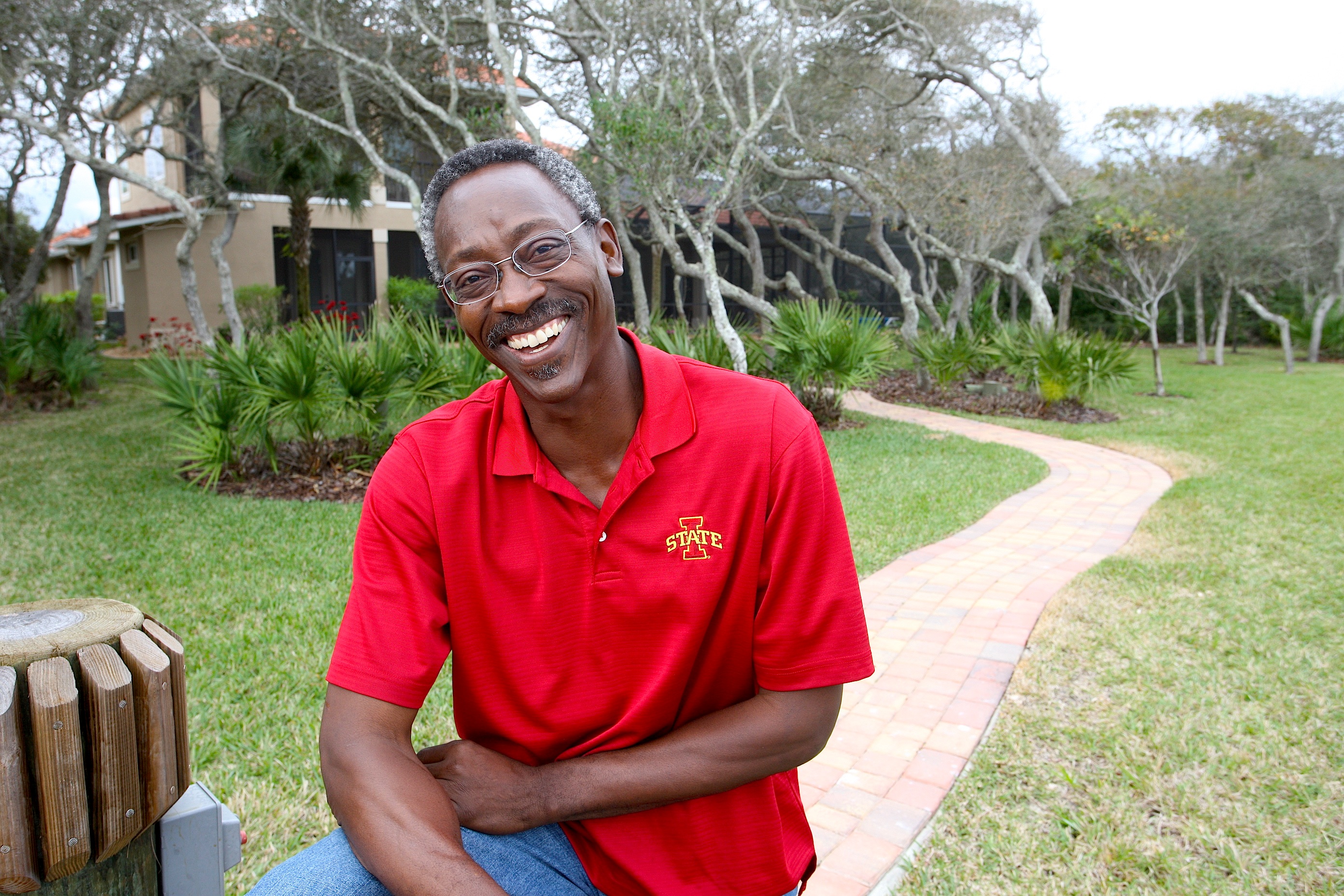
On the eastern side of the state, north of Daytona Beach, we had a delightful visit with Ike Harris (’74 accounting) at his home in Palm Coast. Ike is a former ISU and professional football player and was president of the Bell South communications corporation in Atlanta before moving to Florida with his wife, Charlene (’75 textiles and clothing). The two met as students at Iowa State and have raised two children.

Jim and I are back in Iowa now, with a winter storm bearing down, so I’m thinking maybe we should have stayed awhile longer in the Sunshine State. I’ll tell you more about some of these alumni and share more of Jim’s photos in the coming weeks.

Ready to roll…again

4 Feb

Well, our winter travel reprieve has ended. We haven’t been on the road since November, and it’s been great to stay put in Iowa for awhile. I’m pretty well caught up with posting alumni profiles from our travels last fall to New England and the Southwest, and the spring issue of VISIONS is mostly in the capable hands of designer Scott Thornton (always a good feeling).

Since I’ve been close to home, I’ve also spent the last two months in planning mode for the rest of our VISIONS Across America travel. We’re heading to Florida next week to meet with four alumni. After that, we’ll have just a few weeks to prepare for the next trip – this time we’re traveling to Washington, D.C., Maryland, Delaware, and Pennsylvania. (Will there be apple blossoms on the trees – or snow on the ground? Frankly, it makes me nervous.) Then we’ll have another quick turn-around before heading off to New York, New Jersey, and Connecticut in late April.

That will leave just 16 more states! But we still have lots of planning to do and lots of miles to cover, because some of those states out west are massive – like Montana. It’s been so much fun hearing from alumni in all the remaining states. I can’t wait to meet them!


A couple of Cyclones in the smallest U.S. state

23 Jan

10-08-12-173F7159

Listening to Sam and Kylie (Stemple) Pfile describe their lives in Rhode Island is something akin to hearing the story of the blind men and the elephant.

“I like the day trips,” Kylie says happily. “In two-and-a-half hours you can go to six states.”

“You’ve got to get used to being out here,” Sam counters. “The driving is awful.”

“You’re so close to so many things,” Kylie says. “I like the outdoor activities… the cities, the food, the history.”

“The people here are really different,” Sam says. “Most of our friends are from the Midwest.”

Sam clearly misses the Midwest.

But they both agree that they moved to the East Coast to see what it was like. Kylie (’03 art & design) grew up in Council Bluffs, Iowa; Sam (’01 ag business) was born in Mason City, Iowa, but grew up in Illinois. They met at Iowa State when Sam transferred from a junior college.

“I did a college visit, and after five minutes on campus I said, ‘I’m coming here,’” Sam says.

“We lived on the same floor in Larch Hall,” Kylie says.

They married in 2004 and moved to Colorado, Minnesota, and Massachusetts for Sam’s job as a food safety inspector for the USDA. (“I’m known as The Iowa State Guy at all the plants,” Sam says.) They moved to Rhode Island in 2008. Sam still works for the USDA; Kylie does sales and product design for AVID Products. They have a dog named Gus, whom Sam refers to as “the most spoiled beagle ever in recorded history.”

Sam, you will not be surprised to learn, is eager to move back to the Midwest someday. Kylie is in no particular hurry.

“There’s a misconception by people I meet here that we left Iowa because it was dull and that there was nothing to do and we just wanted to get out,” Kylie says. “But it’s not true. We were just curious about what’s out here.”

Jim and I spent the day with Sam and Kylie (and Gus, who doesn’t seem so much spoiled as just really happy) at their Riverside, R.I., home (not far from Providence) last October. The couple has the distinction of having completed all 50 states on the Wall of Alumni and Friends at the ISU Alumni Center when they purchased a wall plaque after meeting ISUAA president Jeff Johnson at the ISU vs. UConn game in the fall 2011. Rhode Island is the smallest U.S. state, the state with the fewest ISU alumni, and, until they purchased the plaque, the only state not represented on the wall.

Thanks, guys!

On the border

20 Jan

IMG_0350

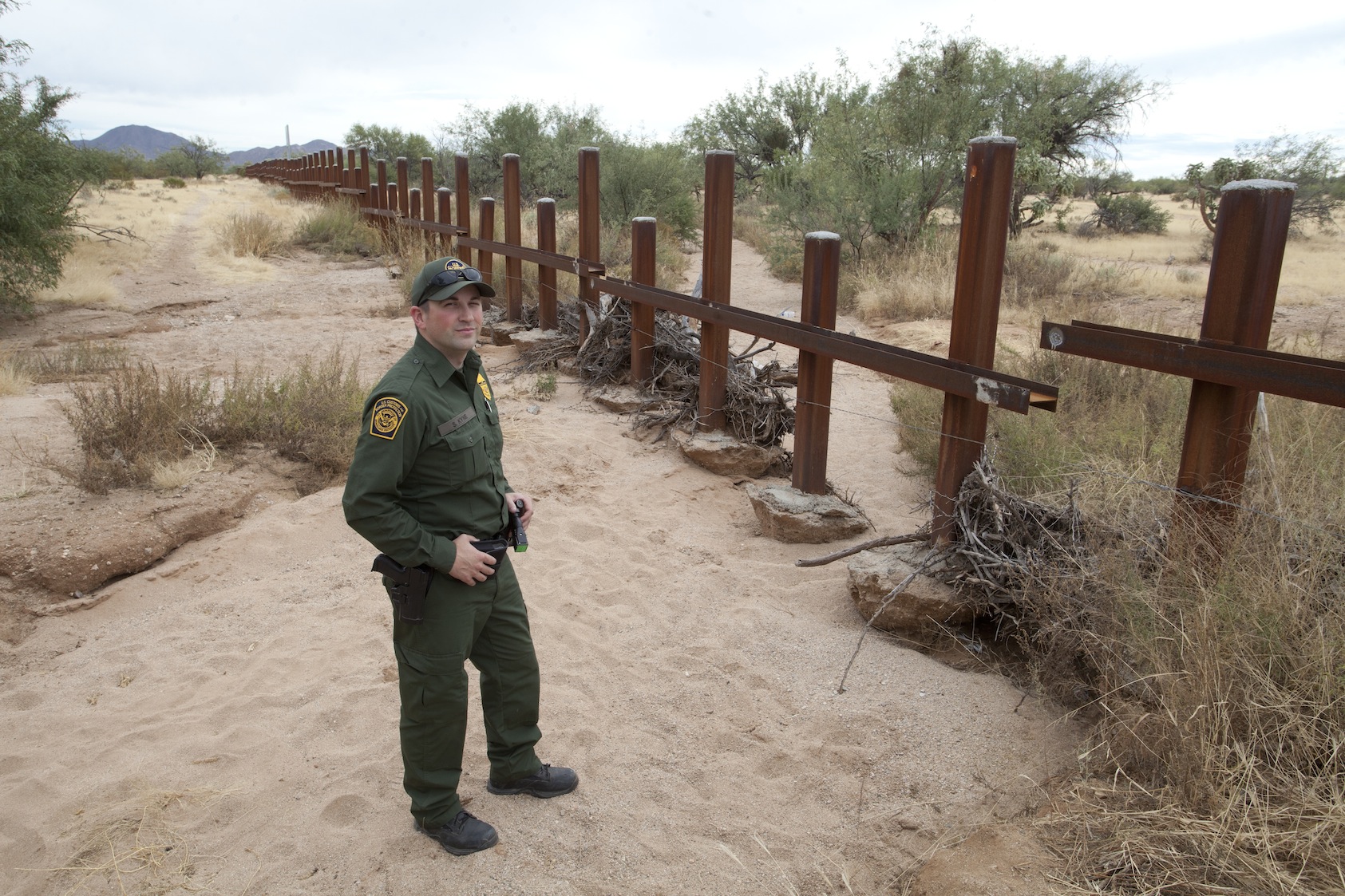
Shawn Kyne could never envision himself with an office job. And boy, did he get his wish. As a U.S. Border Patrol agent, Shawn helps patrol the western corridor of the Tucson Sector made up mostly of the Tohono O’odham Nation, an Indian reservation roughly the size of Connecticut.

It’s an intense, active job for the 2005 political science grad from Minnesota who says he was always interested in law enforcement.

The area Shawn patrols in southern Arizona is mountainous and sparsely populated, with rugged terrain and a harsh climate. There are tarantulas, rattlesnakes, scorpions, and plants that sting and poke. Often the people he encounters crossing the border illegally from Mexico into the United States have been walking for five days or more.

“I patrol the desert, looking for footprints and signs of entry into the U.S.,” Shawn says. “We run into everything from people coming here for work, human and drug smugglers, stolen vehicles, and gang members. We run the gamut of law enforcement. We operate on the pavement and in the dirt in the most remote areas of Arizona.”

Indeed, Shawn says no two days are ever the same.

“You never come to work expecting a boring day,” he explains. “You could lay in a wash for six hours and not hear a peep. And some days it’s like a movie – and it’s all good parts.”

At the heart of his work is tracking: using skills both simple (following tracks, looking for disturbances on the ground) and high-tech (thermal imaging, GPS, ground sensors).

“It’s not for everyone,” he admits. “It’s hard work, long days, and catching people who aren’t happy to see you.”

He says the Tucson Sector is one of the most active sections of the border, with people trying to cross into the country illegally every day, on every shift. And the smugglers are getting more sophisticated – but so is the Border Patrol.

“We have more agents on the ground and access to more technology than ever before,” he says.

IMG_0301

In the photo above, Shawn is standing by the border fence. Part of the fence that runs along the U.S./Mexico border in the Tucson Sector of Arizona is a simple vehicle barricade – you can easily walk across the border here, but not legally. He explained that technology allows agents to detect crossings in these remote areas and arrest those who attempt to enter the country illegally. Shawn told photographer Jim Heemstra that if he walked into Mexico and crossed back into the U.S., he would have to arrest him. And he wasn’t joking.

A career gamble that paid off

4 Jan

Alison for blog

More than 320,000 people gathered in Las Vegas last summer for one of the largest music events in North America: The Electric Daisy Carnival. For three nights, fans were entertained by more than 150 musical acts, 500 theatrical performers, and 12 large-scale interactive installations and pyrotechnic displays.

Alison Monaghan (’05 journalism/mass communication) was there. A senior account executive for Kirvin Doak Communications in Las Vegas, Alison worked through the night, making sure the needs of the media and the artists’ publicists were being met.

Electric Daisy Carnival (EDC) is a year-round account for Kirvin Doak, and Alison handles the publicity aspects of the mega-event.

“I work with media coverage,” Alison explained. “It’s very cool to see your first story run in Rolling Stone. It’s one of those pinch-me moments.”

Alison works not just with EDC but with other clients including those involved in Las Vegas entertainment, nightlife, resorts, and real estate. (Once, a story she pitched about bilingual casino dealers made it on the front page of the New York Times.) She also works for clients in the nonprofit world, specifically with the Justin Timberlake Shriners Hospitals for Children Open, a golf tournament in the fall series of the PGA Tour.

The Las Vegas strip is a world away from Alison’s rural hometown of Guthrie Center, Iowa. After she graduated from Iowa State, Alison knew she wanted to travel and live in a big city in a different part of the country, but she wasn’t sure where.

She asked herself: “Where can I move to be on my own and prove I can do it?” She sent resumes to New York with no luck, then moved to San Diego. From there, she was told that Las Vegas was the best place to get a job in public relations.

Alison gambled and won. She’s been in Las Vegas for six years now, and she’s in no hurry to move on.

“For me, this is a place to put some roots down and stay here for a long time,” she said. “For where I am in my life, this is my dream job. I’m excited every day.”

Working together in an emergency

21 Dec

173F5419[1]

Matthew Hake had been the division administrator for the Vermont office of the Federal Highway Administration just two and a half weeks when the unthinkable happened: A massive flood knocked out bridges, destroyed roads, and isolated entire towns from the outside world.

The August 2011 flood was caused when Hurricane Irene moved inland and stalled over the state of Vermont, dumping as much as 11 inches of rain on parts of the state.

“It was a mess,” Matthew said, more than a year later. “I was working 15- to 18-hour days. I was not experienced with disasters and emergencies. I had to come all the way to Vermont to experience a hurricane.”

Matthew (’84 civil engineering) had previously been stationed with the Federal Highway Administration in South Carolina, Washington, D.C., Utah, California, Wyoming, Arizona, Delaware, and Wisconsin. He had never experienced anything like the flooding in Vermont.

“Vermont’s topography is carved out by rivers, and the towns are in the valleys,” he explained. “So all the water inundated the towns. It devastated much of Vermont. Five towns were entirely cut off. It was amazing the amount of damage this water created.”

Matthew’s federal team worked closely with Vermont’s Department of Transportation and with other federal relief programs such as FEMA. He said the response to the disaster was amazing.

“Vermonters just came together to make sure everyone was OK,” he said. “The state could not have done this without outside help. The National Guard, volunteers from other states, contractors – everyone dropped what they were doing to help out.”

Matthew says the state was close to being back to normal when we visited him at his home near Burlington in October 2012. Some bridges and roadways in the southern part of the state were still being rebuilt.

Just a couple of lobster Maine-iacs

17 Dec

173F1209

Meeting Susan Chadima and Michael Steitzer on the coast of Maine this fall gave me the added bonus of getting a crash course in Lobster Eating 101. It turns out that there’s a lot of ripping and draining and cracking and probing and dipping and scraping and poking and dunking required before you can actually eat the lobster. This involves tools, a bucket, a little dish of melted butter, and a very large, plastic bib.

Clearly Susan and Michael have done this a time or two. They’ve lived in Topsham, Maine, for 33 years.

Susan (’76 zoology; ’79 DVM) and Michael (’75 architecture; ’83 master of architecture) met at Iowa State the first week of Susan’s freshman year. (Michael says he saw Susan wearing a pretty dress.) Originally from Cedar Rapids, they moved to Maine looking for a change from the Midwest. (“We thought we’d stay out here for a few years,” they say.) Susan started a veterinary practice and then expanded to a full-fledged clinic: the Androscoggin Animal Hospital.

Michael, an architect with a small firm, designed the clinic. Though he has designed schools, hospitals, and homes, he says 95 percent of his current business is focused on veterinary hospitals, which he has designed all over the country.

Susan is a traditional small-animal veterinarian. She has also traveled to Afghanistan nine times to train veterinarians and perform hands-on medical procedures. The couple recently adopted a street dog from Kabul.

They love living in Maine and say the people are friendly and welcoming.

“People here don’t fit the East Coast stereotype,” Susan says. “It’s very much like the Midwest.”

But back to the lobsters. Lobster fishing, Michael says, is very tricky and territorial. He explains that there’s a complex code of ethics involved among lobster fishermen. Failure to comply with these unwritten lobster laws can resist in swift penalties, such as finding a big hole in the bottom of your boat.

He also wants to be sure Jim and I have the lingo down: You don’t call a lobster restaurant a “lobster shack.” A crab restaurant is a “crab shack,” but a lobster restaurant is a “lobster house.” If you just buy the lobster from a little building on the coast, that’s called a “lobster pound.”

Bon appétit!

An Iowa soul

10 Dec

10-07-12-173F5846

Donna Wishman Miles (’81 craft design) has lived in Vermont for 20 years, but she still stays true to her Iowa heritage.

“I like to say that Vermont is beautiful and a wonderful place to raise a family,” she says. “But my soul sometimes gets all crumpled up in these mountains, and every so often I need to get out to Iowa where it is flat so I can spread it out and breathe more deeply.”

A native Iowan, Donna was a third-generation Iowa Stater. In her art program, she specialized in surface design.

“I learned to quilt and weave from Iowa State,” she says. “ I learned to butcher a chicken and bake bread from my mom.”

The first quilt Donna made at Iowa State was “funky.” But her designs became more traditional when she accepted a job caring for the quilt collection at Living History Farms in Des Moines, where she met her husband, David Miles (MA ’81 history).

Today, Donna’s quilts have come full circle, she says. The inspiration for a recent quilt came to her when she was in Italy.

“I was in Rome, and I finally got to see the art I studied in college,” she says. “It affected me deeply to be standing in front of it. I needed to make a quilt that reflected the masters’ influence.”

The result, a quilt titled “Off the Beaten Path” (shown with Donna, above), includes not just the art and architecture of Rome but also the cobblestones, lemons, olives, almonds, tomatoes, garlic, coffee beans, and other sensory influences of the Mediterranean.

Her current project, still in the beginning stages, is an Iowa landscape. She’s carefully choosing the colors and patterns that remind her of Grant Wood’s Iowa as well as her grandfather’s farm. Once it’s pieced, she’ll hand-stitch the quilt.

“I’m a hand-quilter,” she explains. “I need to be close to it and feel it. I like putting little, tiny stitches in it.”

Donna’s quilts take time: She has a full life in Woodstock, Vt. She works with the local elementary school’s farm-to-school program and volunteers at Billings Farm and Museum. She raises chickens and ducks, grows pumpkins, and sells eggs (and the pumpkins, too). And she has two dogs, a cat, and two sons: Eric, a senior at Champlain College, and Yeabsira, a sixth-grader whom she and David adopted at the age of 4 from Ethiopia.

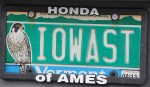
IMG_2861Oh, and here’s one more tie to Iowa: Donna’s Vermont license plate. It reads “IOWAST.”