Working in the weeds

3 Feb

Here’s another look back at warmer, greener times: Our September meeting with Dawn Refsell (’01 agronomy, MS ’03) in Lathrop, Mo.

KI0A2354

Sometimes Dawn Refsell is a detective. As in, “Why did these weeds not respond to a herbicide applied by the farmer?”

Sometimes she’s a product developer, experimenting on different plants in the field.  As in, “How can we make this fungicide more effective?”

And sometimes she’s a technical service provider. As in, “Here I am on your farm. How can I help?”

Dawn has two degrees from Iowa State – a 2001 bachelor of science in agronomy and a 2003 master’s in crop production & physiology – and a PhD in agronomy with an emphasis in weed ecology from Kansas State University. She’s a field market development specialist for Valent USA Corp.

It’s an interesting time to be a weed expert.

“We’re going back to the ’80s and ’90s in terms of weed management,” she says. “We’re going back to the older chemistry and mixing with a little of the new.”

Dawn lives with her husband, Doug, in Lathrop, Mo. Her field territory is Missouri, Kansas, and Iowa, but she travels throughout the country. Her focus is row crops and any of the products Valent sells for those crops. In early September, for example, she spent a week in Mississippi, working with a herbicide on cotton and peanut plants. But mostly, she says, she works out of her truck.

Dawn grew up on a grain and livestock farm in Wallingford, Iowa (“a little speed-bump town.”) She was active in 4-H, and that connected her to Iowa State. All of her college roommates were 4-H friends. She was also a member of the second class of Hixson Scholars.

One of Dawn’s specialties is waterhemp.

“I wanted to study the weed ecology and why it grows,” she said. “I want to understand why the weed is there before we figure out how to kill it.”

Prairie Cyclones

22 Jan

Note: When we met with Mike and Cathy Mores at their Manhattan, Kan., home in September, the temperature was 103 degrees. The current forecast for Ames tonight (Jan. 22) is 8 degrees below zero, and the high tomorrow will only reach 2 above. So even though Kansas was VERY hot, it’s sounding pretty good right about now.

KI0A3932

Mike and Cathy Mores are a small but mighty Cyclone voice among the “passionate purple” Kansas State University fans in Manhattan, Kan.

Cathy (’99 art & design) and Mike (’99 advertising) have twice made their home in Manhattan and have also lived in Big 12 towns of Lawrence, Kan., Boulder, Colo., and Ames, Iowa, as Mike built his professional life in Div. I athletics marketing, advertising, and fundraising. He’s currently the foundation director for Manhattan Area Technical College. Cathy is the owner and art director of Cathy Mores Photography.

Mike grew up in Harlan, Iowa, and he comes from a long line of Iowa State grads. Cathy’s family moved around, from Minnesota to Chicago to Mason City. When she toured the ISU campus, she knew it was where she wanted to be.

The couple met at Iowa State during Greek Week 1997.

“The first time he saw me, I was in a Raggedy Ann costume,” Cathy says, laughing. “I had freckles and pigtails.”

“We didn’t hit it off right off the bat,” she continues. “It took some perseverance on his part.”

The Moreses have a son, Parker, who was born in Ames and may be the biggest 7-year-old Cyclone fan in the state of Kansas.

“We’re die-hard Cyclone fans,” Cathy explained. “We wanted him to grow up feeling connected to something, and that’s Iowa State. He’ll always have this ‘this is where I came from’ no matter where we live.”

Mike and Cathy thrive on the energy they experience living in a college town, and they like living among the majestic Kansas Flint Hills in the heart of the prairie.

“It’s very Midwestern, very ‘Kansas,’” Mike says.

P.S. Here’s an update on Mike’s career: I just learned that he recently accepted a position as director of business development for Scott Rice, a Kansas City-based company specializing in business interiors. He’ll still be working in the Manhattan area.

At home in the West

13 Jan

Justin pic

Kalispell, Mont., is a long way from Carroll, Iowa.

But Carroll native Justin Ahmann (’05 civil engineering) and his wife, Laura, were deliberate about where they wanted to live.

Laura is originally from California but went to college in Montana. The two met in Omaha, Neb., when Justin was working as a civil engineer for the Union Pacific Railroad and Laura was going to medical school. They spent three years living in Virginia.

“We belong in the west,” he says, citing the proximity to water, mountains, and national parks. “If I’m going to live somewhere this far from home, it should be worth it.”

Justin’s career in civil engineering has already been far-reaching, from working with bridge hydraulics for Union Pacific to mining and power-plant waste in Virginia to his current position as director of engineering for APEC engineering, where he works with water rights issues, utilities, dams, and municipal districts to expand and modify their sewer and water systems.

Graduating from Iowa State, Justin says he “had more opportunities than I knew what to do with.” In fact, he says, he didn’t know how good Iowa State’s education was until he traveled around the country and met people from other schools. He quickly found opportunities in Virginia when Laura chose that state for her medical residency. And when they decided to move to Montana, it took him just six weeks to find a job.

Justin and Laura live on 10 acres in Kalispell; they have two sons under the age of 3.

“We could go to the big city and see a lot of [career] opportunities,” he says, “but we kind of passed on that to have a simpler life. We wanted our kids to grow up here.”

Mile-high chills

3 Jan

KI0A6923

Zoey creeps into the bedroom.  TAP.  The room is pitch dark.  TAP.  She reaches for the

LIGHT SWITCH

But, doesn’t find it.  Until –

– A PALE HAND hovers over hers.  Guides it to the light switch.

She flips the light on.  Jumps back.  There’s no one there.  She’s alone in the room.  She begins to tremble.

Horror is hot. And nobody embraces the genre more than Jeremy McCann (’01 liberal studies), a screenwriter and actor living in Denver, Colo.

Though he also writes television comedy, it’s Jeremy’s horror scripts (an excerpt of one is above) that have reaped awards. He recently won the Creative World Awards’ horror/thriller/fantasy screenwriting competition and the Mile High Horror Film Festival screenwriting competition. Other original television pilots and feature-length screenplays have made it into the finals.

Jeremy’s taste in horror films leans toward the classics – “The Exorcist,” “The Shining,” and “Scream” are his favorites – and toward “paranormal/haunting stuff.”

“Most horror movies don’t scare me,” he says. “I think that’s what makes me a good writer – I’m trying to scare myself.”

Jeremy’s year revolves around Halloween, his favorite holiday, and he says he loves to stay at the Stanley Hotel in nearby Estes Park, the inspiration for Stephen King’s novel The Shining. (“It’s got a great atmosphere,” he says. “I could just go there for weeks and do nothing but write.”)

As a student at Iowa State, Jeremy says, “I didn’t know what to do with myself.” He wanted to get into film but found himself taking theatre classes. The turning point came when the late ISU theatre professor Patrick “Doc” Gouran took a special interest in Jeremy and helped nurture his writing and acting talents. Everything took off from there.

“Doc’s the reason I’m doing this for sure,” Jeremy said. “He was the best part of Iowa State for me.”

Jeremy, a native of Wiota, Iowa, lives in Denver with his wife, Jennifer, because “it’s gorgeous and close to home,” but as his writing career takes off, a move to California seems inevitable.

Looking back, Jeremy says, “Iowa State isn’t known for its arts as much as its sciences…but I’d love to help change that.”

Family practice

27 Dec

KI0A4772

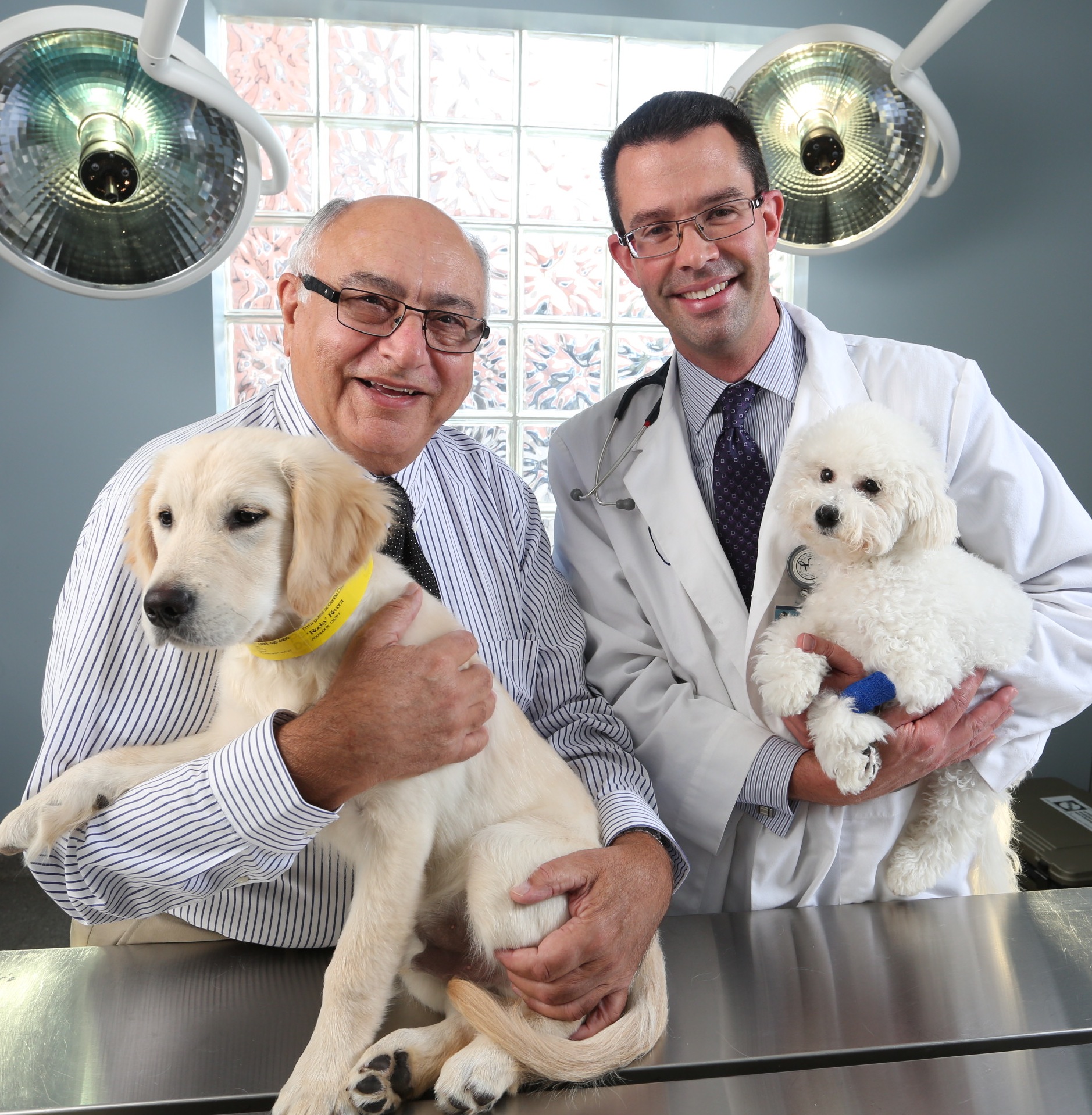
Peter Bashara grew up in his father’s veterinary clinic. As a sixth grader, he cleaned kennels after school and did other jobs around the Omaha animal hospital.

Everyone asked him the same thing: Are you going to grow up and become a vet like your dad?

Peter always said no.

Until one day in junior high school when he finally said yes.

Today Peter doesn’t remember that encounter, but his dad does. And now Peter can’t imagine doing anything else.

Dr. T. Robert “Bob” Bashara (’63 DVM) founded the Mapleview Animal Clinic in 1965. He practiced alone for 17 years before hiring a second associate veterinarian. In 1985, he expanded the practice to a second clinic, Candlewood, on Blondo Street in Omaha. His third clinic – a state-of-the-art animal hospital at 153rd and Maple on Omaha’s west side – opened in 1999. All three clinics are now known as Gentle Doctor Animal Hospitals.

Dr. Peter Bashara (’93 animal science, ’97 DVM) followed his father’s lead and attended Iowa State, but with a slightly different experience.

“His education and classes were so much different,” Bob says. “I was taught in the old building [the veterinary quadrangle now known as Lagomarcino Hall]. We had 47 graduates in my class, and no women.”

Bob was a veterinary trailblazer in the early days. “I was thrown to the fire with nobody to bounce things off of,” he says of his solo practice.

Peter’s entry into the business in 1997 was far more smooth. “I had instantaneous credibility because of my name. I never suffered from [clients asking], ‘Who are you? How old are you?’ If I hadn’t done this, it would have been a colossal mistake.”

Bob says his son’s decision to join the practice convinced him to expand to a third clinic, and it gave him peace of mind.

“When Peter decided he wanted to come back, I thought it was great,” he says. “I had hoped that he would want to take over the practice. It was perfect for me. It took the burden off my shoulders about what to do when I retire. Now Peter is the main man.”

Both veterinarians are active in their professions. In 2007, Peter received the Midlands Business Journal’s “40 Under 40” award. He works with the Nebraska Humane Society and the Animal Emergency Clinic. Bob is actively involved with the national Doris Day Animal Foundation, for which he serves as the chief financial officer.

The business transition from father to son has been nothing but smooth, they both agree.

“I had a philosophy of practice to provide really good care for animals with really good customer service, and to always be there when they need me,” Bob says. “I had a following of devoted clients. I worried, ‘Will someone else carry on that tradition?’”

There’s no doubt: Thanks to son Peter and Iowa State, the answer is YES.

Baby, it’s cold outside

20 Dec

06-02-13 JOHN 173F8457 copy

Fargo, N.D., has the worst weather in the country. At least according to viewers of the Weather Channel, who annually vote it into the “final four,” often beating out perennial favorites Fairbanks, Alaska; International Falls, Minn.; and Caribou, Maine. The city knocks down its residents with a one-two-three punch of powerful blizzards, extreme cold, and spring floods. Once, Fargo even had one of this country’s most powerful tornadoes.

If there’s any comfort in all of that, it’s John Wheeler.

John (’84 meteorology) is a television weatherman who’s been providing rational, science-based forecasts to citizens of Fargo since 1985.

John knows all kinds of weather; he was born in Louisiana, raised in Alabama, and moved to the Midwest – Madison, Wis., and West Union, Iowa – during his high school years.

At Iowa State, he rejected the minutiae of his engineering classes and moved into meteorology.

“Weather is ‘big picture,’” John says. “It’s so sensible. It’s ‘Is it going to rain on me today?’ That was more appealing to me. It had never occurred to me until I got to Iowa State that I could be a TV meteorologist.”

After graduating in 1984 and meeting his wife-to-be, Emily Williams (’86 interior design) on the Richardson Court paint crew, John joined the staff of WDAY, the ABC affiliate in Fargo.

The combination of being so far north and being so flat makes Fargo the “blizzard country of America.” (“With the exception of western and northern Alaska, we have more blizzards here in the Fargo area than anyplace else in the U.S.” John says. “It’s the windiest, non-mountain, Class 1 weather station in the United States.”)

“It’s also just dang cold,” he says.

If you mention rival-cold-city International Falls, John bristles.

“International Falls gets the sexy low temperatures – you know, the 45 belows. We don’t get those lows. But International Falls gets warm in the daytime, and there’s no wind. We have a lot of days here in the winter where it’s in the 20s below in the afternoon.

“It’s remarkably colder than Iowa was,” he continued. “I was really surprised at that. I used to think Iowa was cold. And I didn’t like cold weather when I lived there. I’ve moved up here and learned to embrace it.”

John walks to the TV station – and to the North Dakota State University campus, where he teaches classes in meteorology – year round because, he says, as a meteorologist he should experience the weather he’s predicting.

He says his job never gets old, because every day there’s a new problem: What’s the weather going to be like tomorrow?  And because a broadcast meteorologist has to be not only accurate but entertaining, he has to be a good communicator.

And people in Fargo always complain about the weather.

“They get really crabby,” he says.

Nuclear family

10 Dec

173F2608

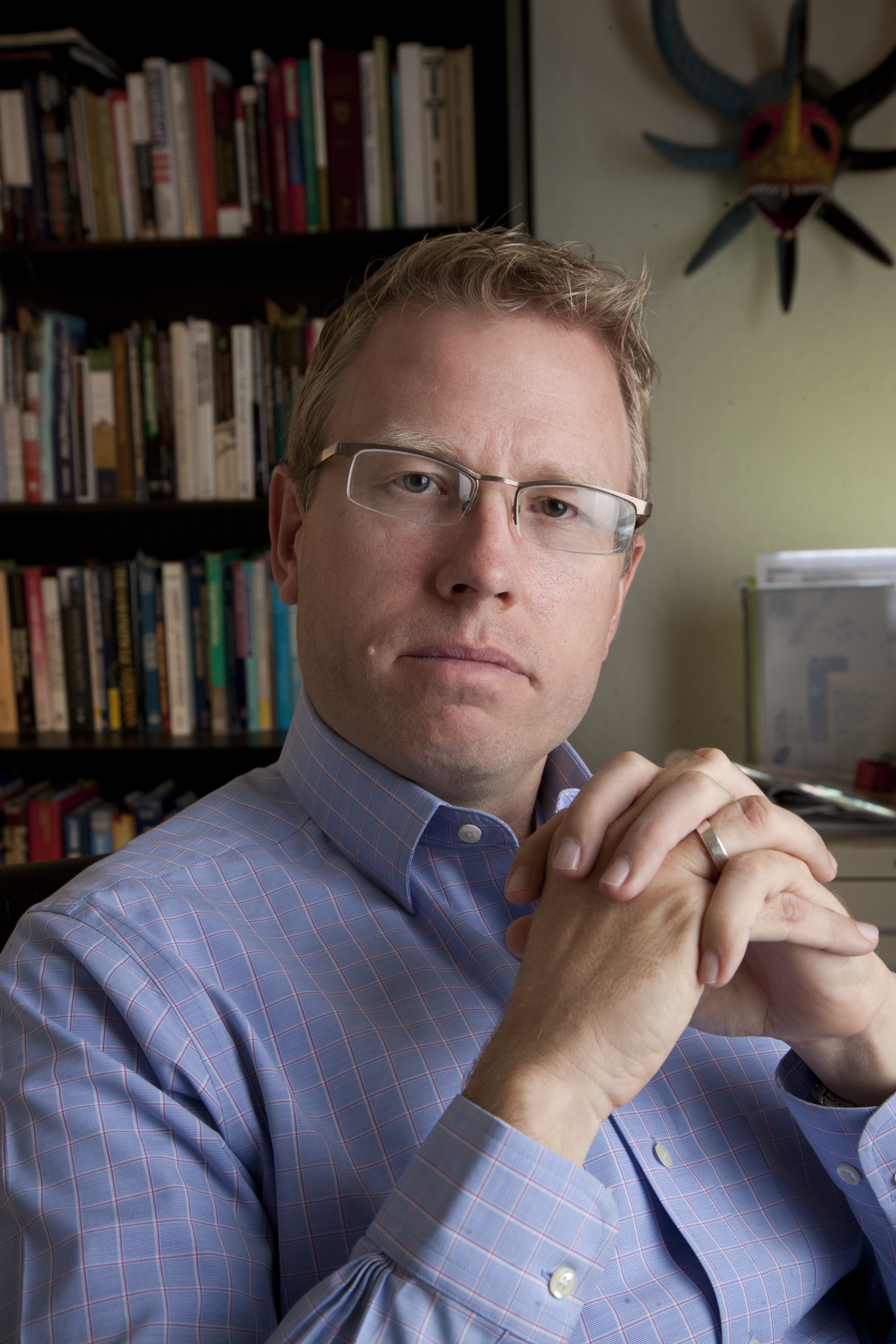
Just when you’re in total awe of the accomplishments of Kory Budlong Sylvester (’92 nuclear engineering), the program manager for Nonproliferation and Treaty Verification at Los Alamos National Laboratory in New Mexico, his youngest son, Syler, takes you down a notch.

“Dad isn’t that interesting,” announces Syler, age 11.

Ah, youth.

It’s not surprising that Syler – and, likely, his 14-year-old brother, Max – don’t understand what their father does for a living. It’s difficult for many adults to grasp. The scope is just so BIG.

In his role at Los Alamo National Laboratory, Kory is responsible for managing a portfolio that includes technical support for international safeguards, export controls, arms control verification, and global engagement programs. This includes the Laboratory’s work in the Next Generation Safeguards Initiative, the International Nonproliferation Export Control Program, warhead dismantlement and transparency efforts, and support for the Comprehensive Nuclear Test Ban Treaty Organization. He’s also the U.S. member of an advisory group for the director general of the International Atomic Energy Agency. He travels to Washington, D.C., at least once a month and spends much of his time in Vienna, Austria.

And that’s just what he does now.

KoryHe’s also been a congressional fellow to the Committee on Appropriations for the U.S. Senate, a senior technical advisor at the National Nuclear Security Administration, and a congressional fellow to the Committee on Homeland Security for the U.S. House of Representatives. He holds a Ph.D. in nuclear engineering from MIT.

“Our work requires in-depth understanding of international security. A key part of my job is to know what Washington needs and help them find solutions to their problems,” he says.

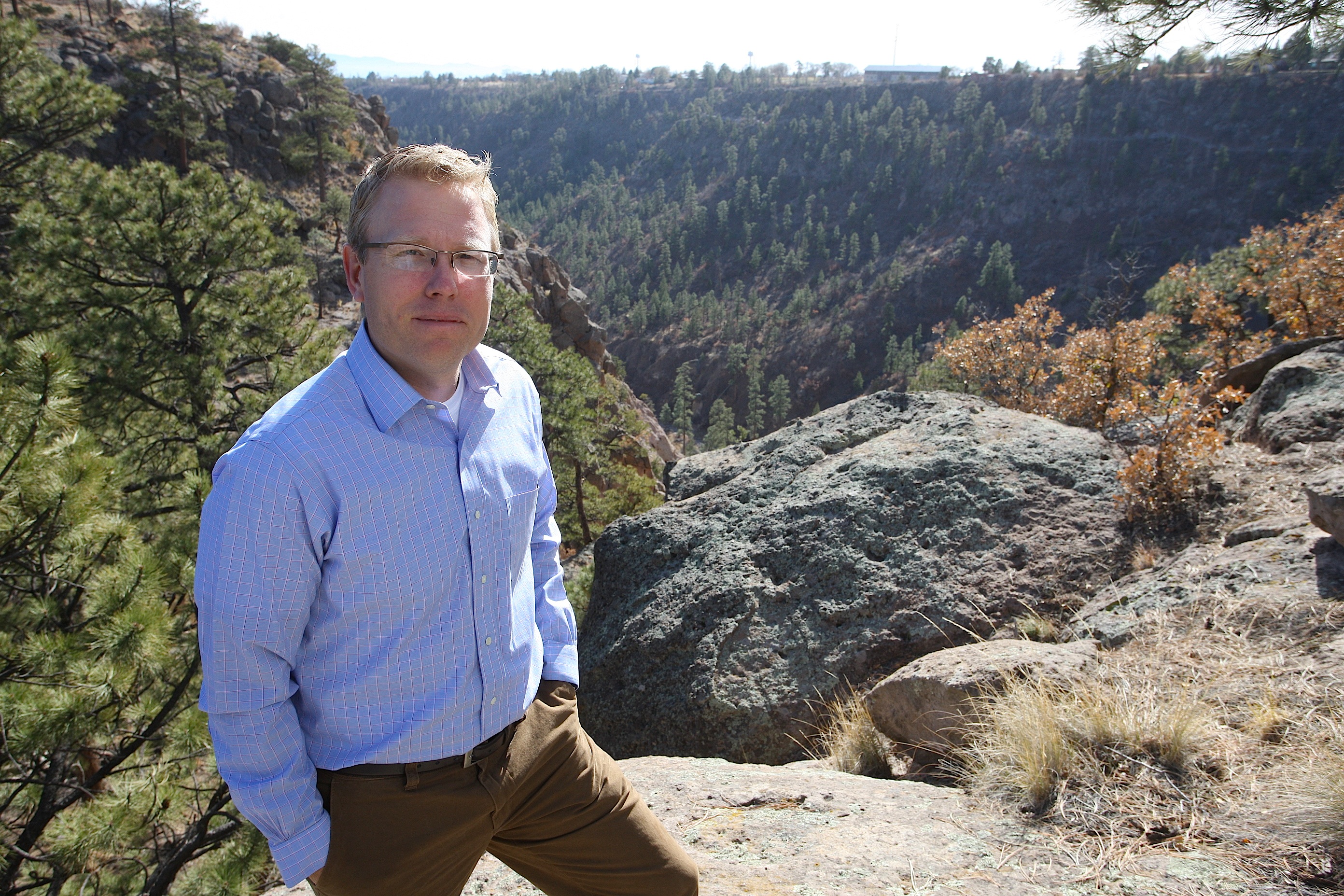
And here’s the really funny thing: You would never in a million years get that Kory works on issues critical to the security of the United States of America by sitting down and talking to him over a cup of coffee on his deck overlooking Pueblo Canyon.

“He’s humble,” his wife, Susan, says. Kory and Susan (’86 journalism/mass communication) met at Iowa State when she was his supervisor in the Honors Program.

“I got him when he was young and moldable,” she says, laughing. By outward appearances, the two could not be more different.

“On our honeymoon, I had a John Grisham book on the beach and he had, I don’t know, a book on differential equations or the creation of the atom or something. He is geek to the bone.”

Kory chuckles but gets back to the business at hand: nuclear nonproliferation.

“We take our jobs seriously here,” he says. “National security is a fundamental mission for the Lab, and I work with an incredibly competent and dedicated group of experts. It’s a sober responsibility to see that nuclear weapons are never used again. We’ve had some difficult years struggling with proliferation challenges, and we like to think we’re part of the solution.”

Almost paradise

4 Dec

08-13-13 KI0A2816

If Jason and Tracy (Blough) Wilwert’s home in Washington – across Puget Sound from Seattle – seems like paradise, it might be because they live near the entrance to Olympic National Park.

When Tracy first wrote to me, she and Jason were living in Port Angeles, just a stone’s throw away from the park entrance, where they had bald eagles fishing in the creek bordering their backyard. They moved to Sequim (pronounced “Squim” by the locals) in February to be closer to church, schools, and Jason’s business; Sequim is a little farther from the park, but their new home has a view of the Strait of Juan De Fuca to the north and is frequented by a herd of elk.

Oh, and the town is famous for its lavender farms. Paradise, indeed.

IMG_7557

Jason and Tracy met during their freshmen year at Iowa State. Both were biology majors; both graduated in 1991; both played in the ISU Cyclone Football Varsity Marching Band. Both became physical therapists.

They started their careers in the Midwest, followed by traveling physical therapy work across the country. They moved to Port Angeles in 1999 and stayed. Jason purchased a private outpatient clinic in Sequim, and Tracy is an acute-care physical therapist at the hospital in Port Angeles.

When Jim and I visited them in August, they introduced us to their two very bright, polite children: Carmen, 13, and Keith, 11.

Tracy and Jason like to run, hike, and camp in their northwestern paradise.

“I almost feel bad that I don’t fish,” Jason jokes. “People come from all over to fish here.”

The cultural side of Cheyenne

26 Nov

09-29-13 bill KI0A1475

Cheyenne, Wyo., is a western town famous for its Frontier Days. It’s an old railroad town. It’s the capital city in a state that ranks 50th in population but 10th in landmass. At about 60,000 people, it’s also the largest city in the state.

Bill Lindstrom (’79 journalism & mass communication) is the executive director of Arts Cheyenne, the arts agency for the greater Cheyenne area. Arts Cheyenne provides education, arts and cultural advocacy, consulting, technical assistance, and programming through creative community partnerships.

“This is a western town – always has been,” Bill says. “But there’s more to it than that.”

In his role with Arts Cheyenne, Bill is helping the community find its identity. He’s helping city leaders look inward to understand who they are and helping people become engaged and involved with the cultural environment.

Bill and his wife, Julie (’79 journalism & mass communication and elementary education), have lived in Cheyenne for 30 years and raised two children, Jill and Ross. Bill is the former CEO of the Association of Film Commissioners International, headquartered in Cheyenne. He also runs a small business, Bevara Digital, that transfers old media to digital format.

He grew up in Elm Creek, Neb., and Shelby, Iowa. Cheyenne, he says, is perfect for its proximity and accessibility and also for its outdoor activities.

“It’s easy to live here,” he says. “You can be as creative as you want to be.”

Software in Seattle

22 Nov

IMG_7081

When Mohammed Alabsi (MS ’07 computer science) went to work for Amazon.com in Seattle in 2007, he was one of about 17,000 employees. Today, he’s one of nearly 100,000 employees worldwide.

So Amazon.com is a fast-growing, fast-moving company, and Mohammed is fine with that.

“The company’s motto is ‘Work hard. Have fun. Make history,’” he says. “I think that’s pretty accurate.”

Since joining the online retail company as a software engineer, Mohammed’s work itself has been fast-moving. Four patents are displayed in his office, and he has three more pending. He’s helped build a number of Amazon products including Mechanical Turk, a crowd-sourcing Internet marketplace; AmazonLocal, a daily deals service; and Amazon’s online advertising platform. He’s currently a member of Amazon’s Elastic Compute Cloud (EC2) team.

Mohammed grew up in Egypt and Jordan. He came to the United States when he was 17, lived in New Jersey, and got his undergraduate degree at the College at Brockport, part of the State University of New York system.

“The best thing about my job is that I get to work with a lot of smart people and have a chance to work with interesting products and exciting problems,” Mohammed says. “I like to think what I do makes a difference.”