Conservation gypsies

13 Nov

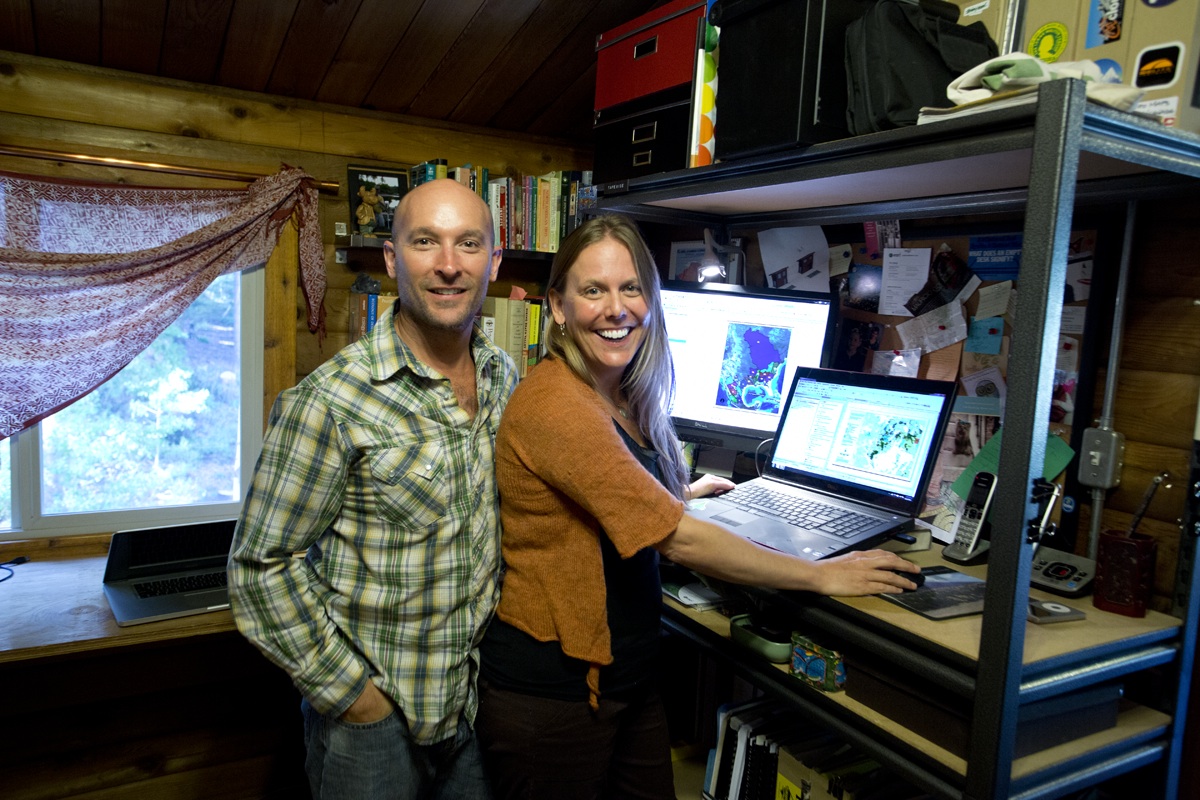
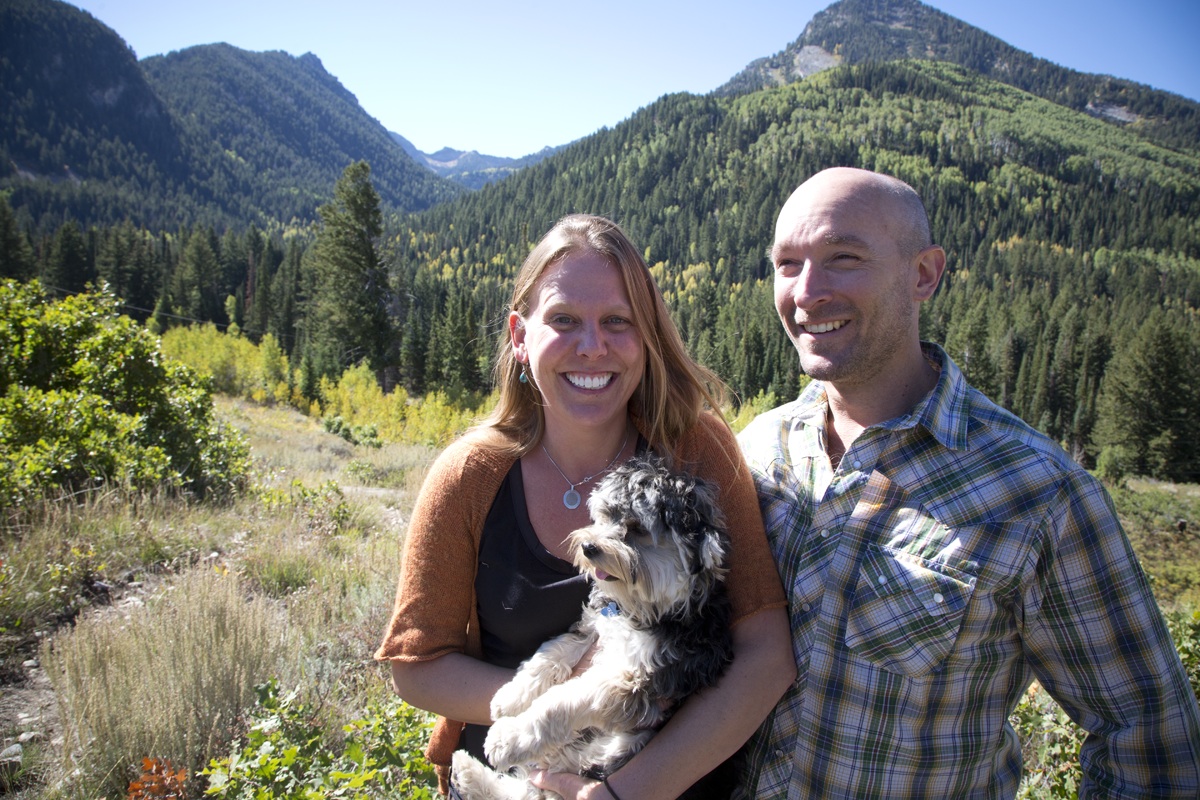
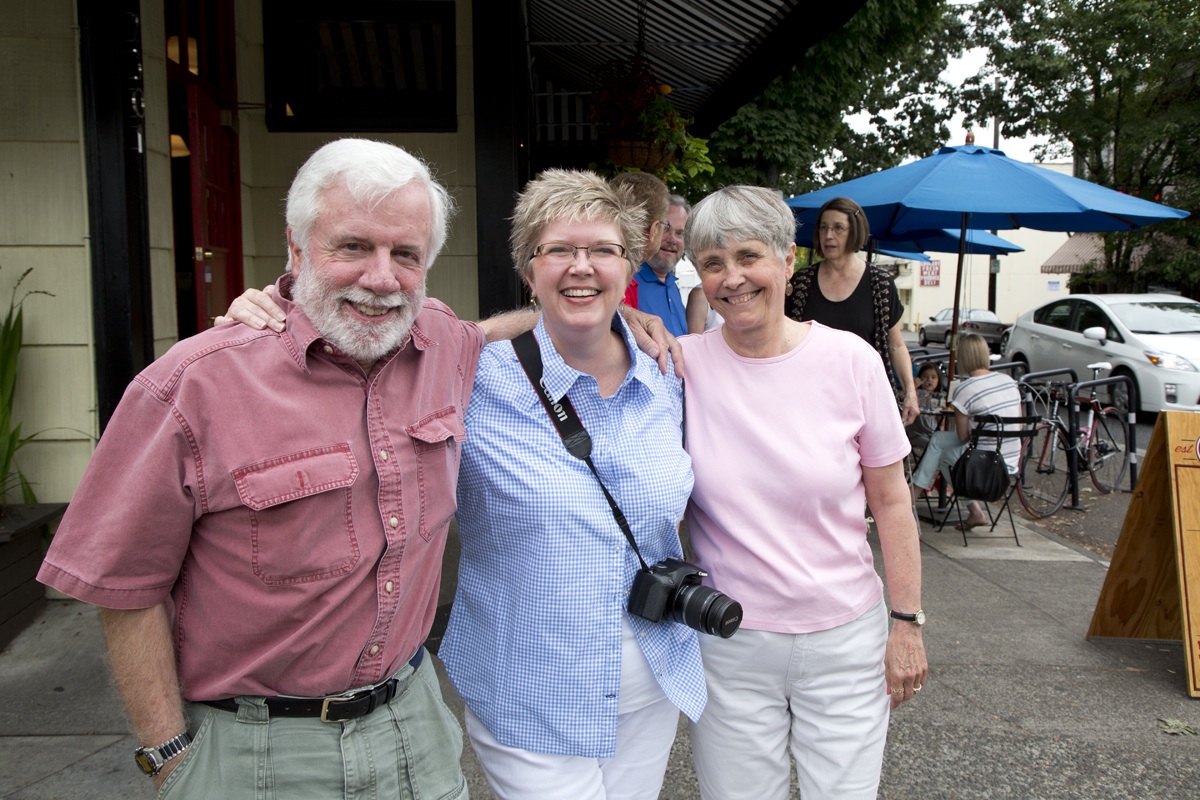
09-24-13 TAYLOR KI0A7640

Finding alumni to feature has been one of my favorite parts of the whole VISIONS Across America project.

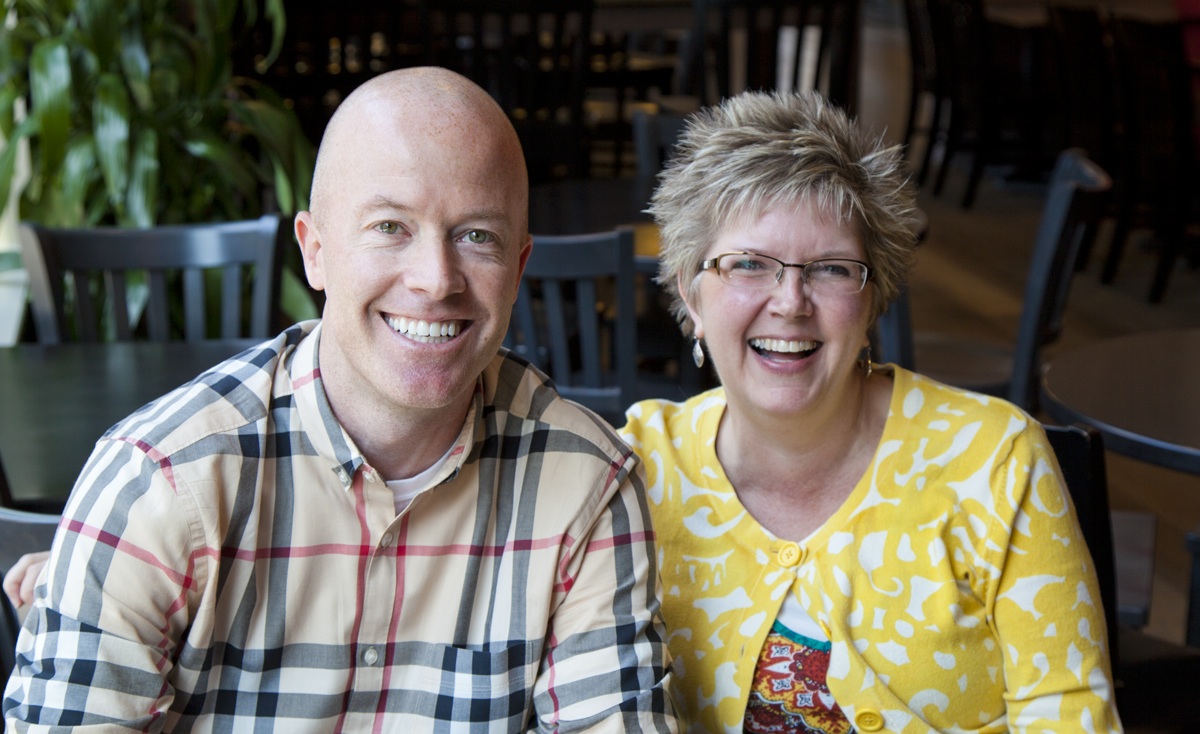
Case in point: Many months ago, I was searching the alumni database for unique stories to tell in Utah. When I found Kathie Taylor and Rob Andress, a couple in Salt Lake City, Jim and I got really excited. My research showed that Kathie was a wildlife biologist and ecological consultant and that Rob was a hydrogeologist. Wow – a double whammy in one of the most beautiful states in the country.

“Finding” them turned out to be a two-part process. Kathie quickly returned my email, and we scheduled a morning meeting (with breakfast!) at their home in late September. But the directions she sent to their home left us a little confused once we were actually in the car and trying to drive there.

“Take the 6200 South exit from I-215,” her directions began. “Follow the signs for Big Cottonwood Canyon. From the mouth of the canyon, we are 8.2 miles up and across a creek. We don’t have a ‘real’ address, so it’s a bit tricky to find. Call me and I’ll be at the road to meet you.”

It turns out that I had to call more than once, because Jim and I were never really sure we were going the right way or were even in the right canyon. But Kathie assured us that we couldn’t get lost, and she gave us a landmark to watch for: big green Dumpsters. We drove up and up and up.

Happily, we found her.

She opened the gate that led us up a private road to a cabin, one of about 25 homes on the mountain. We were greeted by Rob, who had started a fire in the wood stove, and by a small, enthusiastic dog named Crawford. The cabin smelled fantastic – like wood and coffee and something delicious baking in the oven.

09-24-13 TAYLOR KI0A7464

While breakfast was cooking, Rob and Kathie gave us a tour of the two-story cabin they’ve lived in since 2001. The bedroom is downstairs; kitchen, living room, and office space (above) is on the main floor. The cabin is small, cozy, and efficient.

Rob and Kathie are one of a handful of homeowners in their neighborhood that live there year-round. The rest are summer homes.

At 7,400 feet, winter comes early here, and the Wasatch Mountains get a lot of snowfall – three feet in three days once – but Kathie is unfazed. She grew up in northwest Ontario, Canada, the daughter of parents who ran a fishing camp.

“My dad gave me the genes to be on the path I’m on,” Kathie says.

She was “destined” to go to Iowa State, too. Her father, a Creston native, attended Iowa State, as did her sister and some cousins.

Kathie was an undergraduate when she met Rob, a grad student. Kathie was doing fieldwork on a forestry project and Rob was writing his thesis. They met through mutual friends.

Following graduation in 1999 – Kathie with a bachelor’s degree in animal ecology and Rob with a master’s in geology and water resources – Rob began to apply for jobs in Utah.

Kathie wasn’t so sure about that.

“I thought, ‘UTAH? They don’t even serve real beer in Utah!’”

She’s since become a convert.

“Salt Lake City is a hub for lots of things around it. There’s lots of things to do, recreation-wise,” she says. “There are a lot of out-of-the-way places – probably 50 places for every national park and other areas you’ve heard of.”

The couple climb, hike, bike, camp, ski, river raft, and backpack. High-end ski resorts are located within a couple of miles of their cabin.

Rob owns his own hydrogeology firm, Gradient LLC. Kathie owns an ecological consultant company called Argenta Ecological. They share an office in the cabin, but for weeks and even months at a time they’re on the road, working for federal agencies (U.S. Fish and Wildlife Service, Bureau of Reclamation, etc.) and with non-profits.

“We call ourselves ‘conservation gypsies,’” Kathie says.

Rob explains that they bid jobs separately but try to team up to do the work, often traveling to Nevada and Arizona. Much of the work has been in the area of habitat restoration for endangered desert fishes and invertebrates.

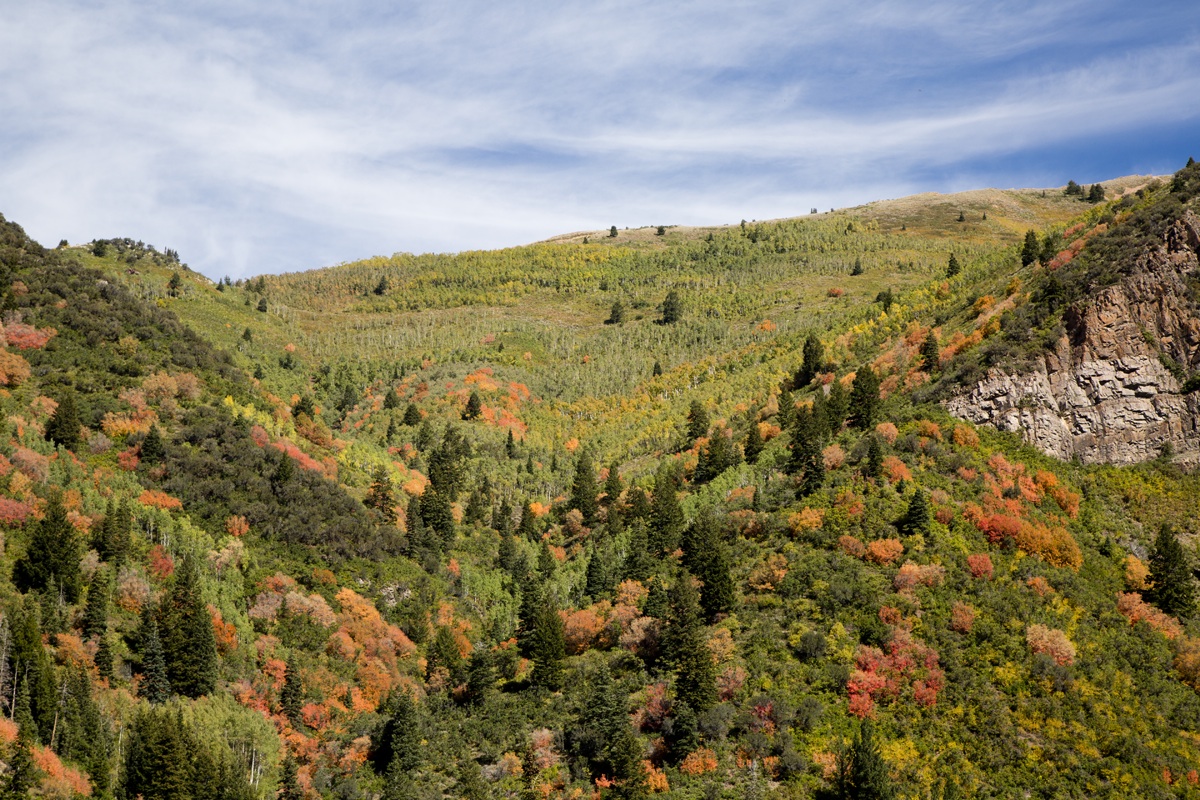
After breakfast and a brisk walk to the top of the mountain (see photo at top), Rob and Jim climbed into our rental car and Kathie and I followed in her truck. Our destination was the Provo River in the Heber Valley, south of Salt Lake City.

With Kathie in the driver’s seat and Crawford on my lap, we went up and over the mountains, past the ski resorts and through a landscape Kathie calls “an island in a sea of desert.”

We arrived at the Provo River and began to scout for photo-shoot locations. Kathie explained that she did one of her first jobs in this area – tagging Columbia spotted frogs. (“Such a great job! I used to come here every day and catch frogs,” she said.)

09-24-13 TAYLOR KI0A8048

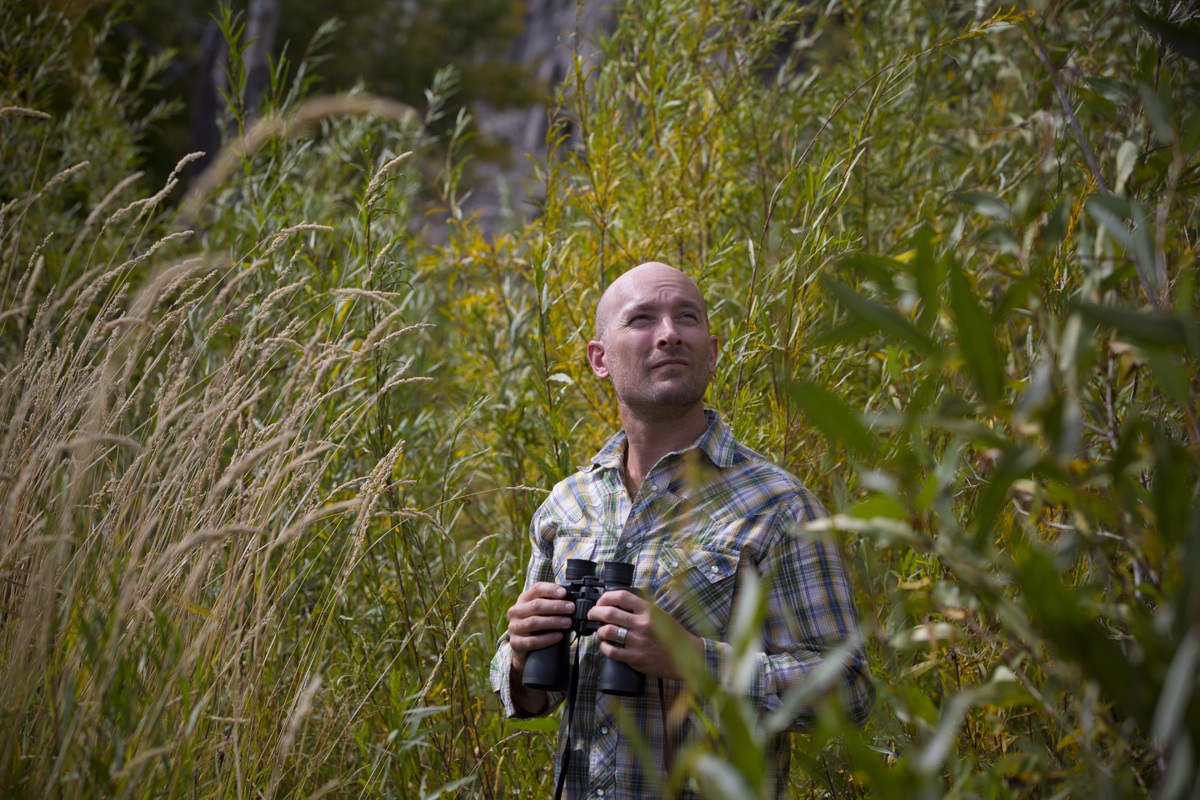
She had no qualms about wading waist-deep into a wetland adjacent to the river, fully dressed. Rob held Jim’s portrait light so it didn’t fall in the water, and I held on to the dog. We attracted a lot of attention. Afterwards, Jim photographed Rob watching birds, a slightly drier pursuit.

09-24-13 taylor KI0A8108

During my research phase I had learned that Kathie and Rob both do site assessment and design, and Rob does construction oversight, restoring springs and their outflow channels.  Kathie also conducts wildlife surveys but has “morphed into a bit of a GIS Jack-of-all-trades.” (“I make a lot of maps and do spatial analysis for listed/sensitive species and for threatened landscapes,” she explained in an email.) They also do some writing – technical reports and management recommendations mostly ­­– and at the time of our visit Kathie was in the final stages of writing a book about a place in Nevada called Ash Meadows that has a very high rate of endemic fish, plants, and insects. It’s also a place where Rob has done restoration work.

Spending the day with Kathie and Rob – seeing where they live and visiting one of the places they’ve actually worked – just reinforced the coolness of my job (meeting awesome people in awesome places) and the truly amazing variety of lives being led by Iowa State alumni. I mean, seriously, here we are in a pond in Utah. I could not have imagined this when we started this project.

09-24-13 taylor KI0A8277

So when we’re finished with the photo shoot and Kathie is covered up to her waist with pond “detritus” (and no spare clothes to change into), she suggests that we all go out for a late lunch at this Latin American restaurant nearby.

Really?

“It’s OK,” she laughed. “They have a patio.”

We spent the next hour on a sun-warmed deck somewhere near Provo, Utah, eating our combined weight in salsa.

And wouldn’t you know it? The next day it snowed.

A different kind of Idaho chip

30 Oct

IMG_7942

Renee Schmitt Shang (’05 computer engineering) went into her senior year at Iowa State knowing that she already had a job waiting for her when she graduated.

The job was working with image sensors at Micron, a company with which she’d interned after her junior year. She now works as a lead product engineer for Aptina, a Micron subsidiary, in Boise, Idaho, creating light-sensing imaging chips used in the cameras in many cell phones and action sports cameras as well as in the original X-box Kinect.

The Rudd, Iowa, native says she derives a great deal of satisfaction from her job.

“A lot of my job is firefighting,” she says. “It’s intense work, with long days of problem solving. I enjoy the adrenaline rush of working through the problems, resolving them in the end, and having happy customers.”

She met her husband, Mike, at Micron, and together they have an 18-month-old daughter, June. After living in San Jose, Calif., for a year, they are happy to be in Boise.

“I love it here,” Renee says. “It’s big enough that there’s always something to do but not a thousand other people trying to do it.”

Renee enjoys biking, rafting and tubing on the river, camping, and downhill skiing on the mountains surrounding Boise.

“I used to take off work at 5 o’clock on Friday afternoons and go downhill skiing with my friends,” Renee says, smiling. “I don’t do that anymore now that we have June.”

Home in Iowa

21 Oct

09-21-13 IMG_9781

After driving 30,000 miles across the United States over the past two years, Jim and I are happy to be back in Iowa. Our 50-state travels are completed.

But we still have lots of stories to tell and photos to post, so don’t go away!

Travels end with a flurry of fall color – and a bit of winter

11 Oct

09-24-13 KI0A7816

I write this with a mix of sadness and joy: OUR MULTI-STATE TRAVELS ARE OVER. No more packing, no more rental cars, no more loading/unloading, no more airports, no more hauling equipment through airports – and, most significantly, no more cheap hotels with bad free breakfasts. The VISIONS Across America travel team (Jim Heemstra and myself) is back home in Iowa after traveling to 49 states in 22 months – a total of 114 nights on the road.

Jim and I finished with a bang last week, putting more than 3,500 miles on the rental car – the most miles we have accumulated on any single trip. We visited seven alumni in the states of Colorado, Utah, and Wyoming.

This was a challenging trip to plan, especially when parts of Colorado received a year’s worth of rain the week before we were supposed to arrive. Two days before we were scheduled to leave Iowa, we scrambled to reconfigure our itinerary to give Colorado time to dry out and roads to be repaired. Thankfully, everything worked out OK. We met everyone we were supposed to meet – and we even got in to Rocky Mountain National Park between the time it was closed from the flooding and closed from this ridiculous government shutdown.

Here’s our last trip, day by day:

Day 1: We drove all day to Denver, Colo. It’s a long way across Nebraska, and really there are no diversions even when you get into Colorado. Yawn.

09-22-13 JEREMY KI0A6800

Day 2: The next morning we met Jeremy McCann (’01 liberal studies), and things started looking up. Jeremy is a Denver-based screenwriter for TV and film who often travels to Los Angeles, so we were lucky to catch him in town. He writes both comedy and horror/thriller scripts, and it was especially fun to debate favorite horror films with him. (We both really love “The Shining.”)

This afternoon we left Denver and drove to Steamboat Springs for the night. The drive was eventful: Pouring rain, snow on the other side of the Eisenhower Tunnel, two-lane mountain roads, more rain, and dense fog over Rabbit Ears Pass. And we also saw a moose.

Day 3: Another full day’s drive, this time to Salt Lake City. Was it wrong of us to listen to the soundtrack to the Broadway musical “Book of Mormon” on the way there? Maybe, but it helped pass the time.

09-24-13 SALT LAKE CITY KI0A7171Day 4: We started the day with a walk to the 35-acre Temple Square in the heart of downtown Salt Lake City, an area that was nice and quiet in the early morning. The Temple reminded me a little bit of Cinderella’s castle at Disney World, although Jim’s picture makes it look more like the Taj Mahal. Afterwards, we checked out of our hotel without eating breakfast (bad or otherwise) because the alumni we were scheduled to meet with this morning offered to fix us a homemade breakfast. Yay!

We drove up Big Cottonwood Canyon in the Wasatch Mountains to the year-round cabin of Kathie Taylor (’99 animal ecology) and her husband Robert Andress (MS ’99 geology & water resources). Although the canyon was only a few miles outside Salt Lake City, it was about eight miles up the mountain and it felt a world away from the city.

09-24-13 TAYLOR KI0A7640

Kathie is an ecological consultant; her company, Argenta, provides services that benefit and conserve native species and naturally functioning ecosystems. So, yeah, she works with frogs and fish and all kinds of cool stuff. Rob is a hydrogeologist who owns Gradient LLC, a company that provides ecological planning, design, and restoration. He and Kathie work together on most of their projects. And they have a very cute dog, Crawford, whom I puppy-sat during the photo shoot. Afterwards, we went to a Mexican restaurant for a late lunch, and it was devine.

Tonight we drove to Provo, Utah. I was too tired to enjoy it.

Day 5: Today it snowed at Kathie and Rob’s cabin, so we were glad we’d met with them the day before. I’m learning that in the mountains, fall and winter can be sort of interchangeable, as in: The fall leaves are just now starting to turn, and, oh wait, it’s snowing.

We drove southeast to Moab, Utah, this morning and arrived in time to order a late breakfast at a funky café called Peace Tree. I ate huevos rancheros and Jim got a big breakfast burrito with green chile. It was a truly delicious meal.

09-25-13 TOM TILL KI0A8663

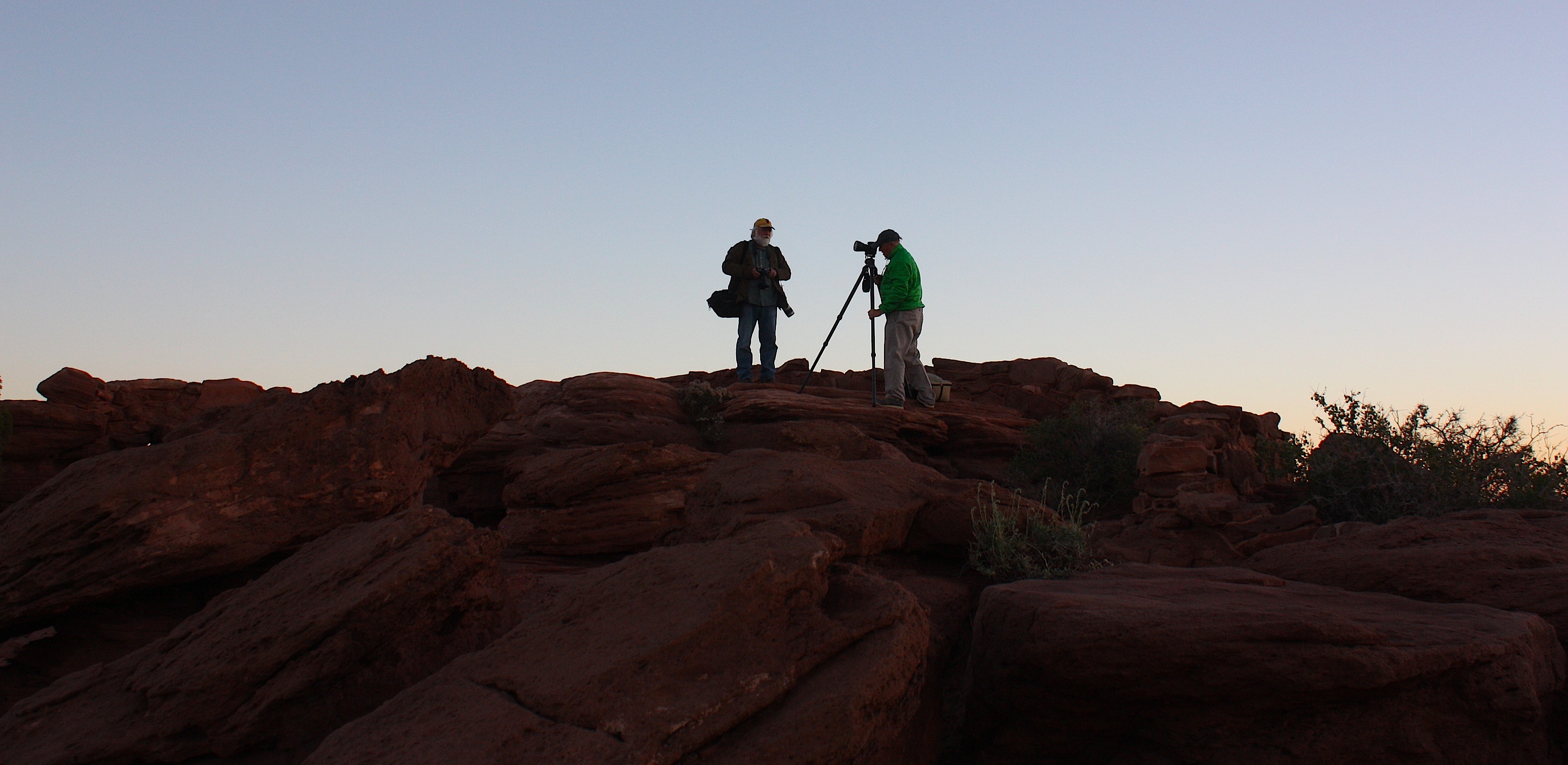
This afternoon we met Tom Till (’71 English), a professional landscape photographer. He has an incredible gallery on the main street of Moab. It’s filled with photos from the Southwest and also from around the world. Tom’s published 30 photo books and also teaches photography workshops. Take a look at his website: http://tomtillphotography.com/

09-25-13 arches KI0A8439

Our idea was to photograph Tom with evening light, but he said that gusty winds were creating a hazy look around the area, so we decided to photograph him the next morning instead. What to do with our extra time? Go Arches National Park, of course. We saw as much as we could and photographed the natural arches and other landforms before returning to the downtown area for our third Mexican meal in a row. Again, it was delicious, but I vowed after that meal not to eat any more Mexican food for awhile.

Jim Tom 8773

Day 6: We met Tom this morning at our hotel at 6:30 and followed him to Dead Horse Point State Park. When we arrived, the sun was just breaking through, and the photo opportunities were endless. I’m sure Tom would rather have been on the shooting end of the photo shoot, but he was a great sport and took us to the best vantage points with the best light. Dead Horse Point is famous, by the way, as the location for the last scene in the film Thelma & Louise.

We left Moab by 10 a.m. (sadly, as I could have spent many days there) and headed back toward Denver. The forecast was for rain later in the day, and we didn’t want to encounter more snow at the higher elevations in our less-than-desirable rental vehicle. (Side note: I requested a 4-wheel-drive SUV and got some kind of minivan/car crossover that was totally impractical for this trip.) We were doing very well on time and enjoying the mountain scenery very much … until we hit Denver traffic and came to a grinding halt for an hour or so.

Our destination for tonight was Fort Collins, Colo. I have a friend there, Adam Warren, who used to work with me at Iowa State when he was a student. We originally planned to go “jeeping” with him, before the rain and floods and landslides and our complete change of itinerary. Instead we settled for a pizza and beer.

09-27-13 RMNP KI0A0127

Day 7: This was the trickiest day. Jim and I wanted to take alumnus Pat Reed (’71 outdoor recreation resources), a 42-year National Park Service veteran, to Rocky Mountain National Park. It made perfect sense to photograph him there; he retired last year from the NPS and moved to Fort Collins to be close both to his family and “Rocky,” one of his favorite parks (he worked at about a dozen different National Park sites during his tenure).

The Colorado rain and flooding and the closure of Rocky Mountain NP had forced us to delay our visit. Pat kept us up to date on the condition and status of the park: It’s completely closed, it’s partly open, Trail Ridge Road is closed due to snow, it’s open again. Each day brought something new. But on the morning we arrived at Pat’s home in Fort Collins, the news was mostly good: The park is open. You just have to drive a really long way to get there.

A drive that normally takes about an hour took us three and a half, down through Denver and back up two-lane mountain roads to the park entrance near Estes Park. But what a beautiful drive! We had rain, mist, fall color, low-hanging clouds…it was great. We learned at the gate entrance that Trail Ridge Road was actually closed, but we were able to go as far as Bear Lake.

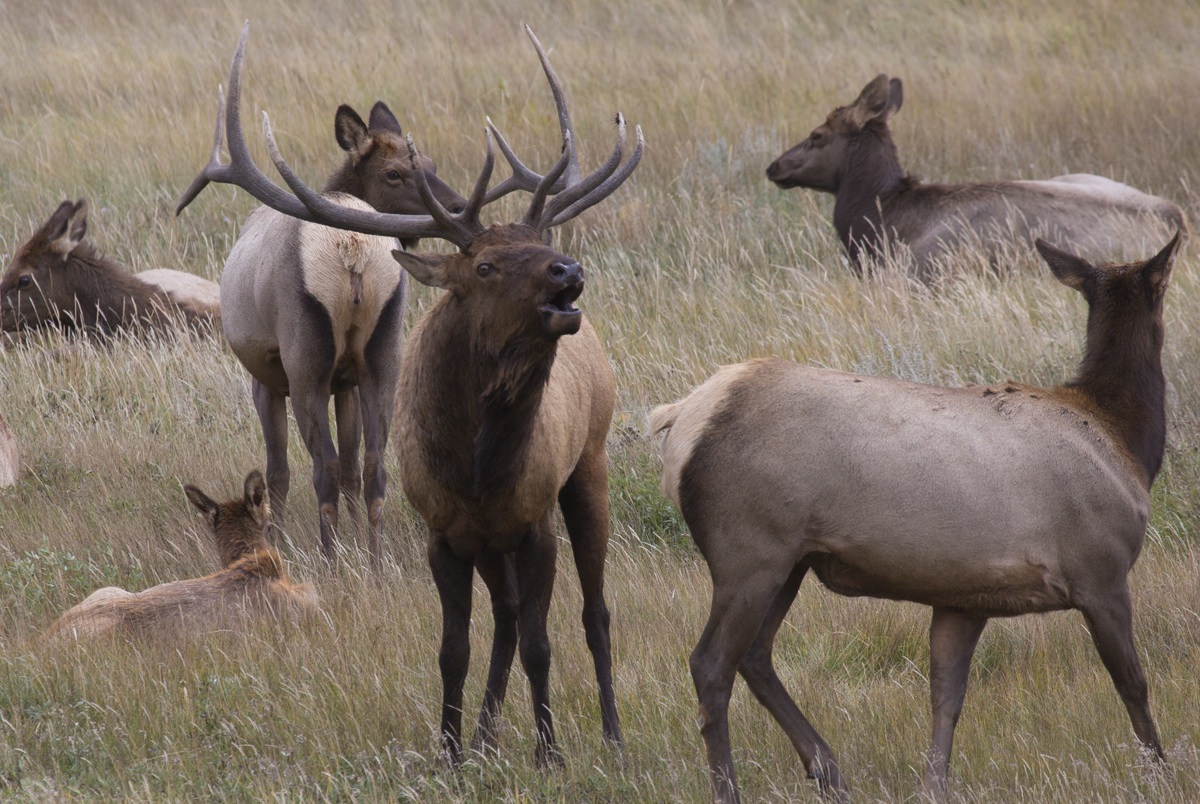
Jim immediately found a scenic area to photograph Pat. Afterwards we drove around looking for – and finding – elk in rut. They put on quite a show for us. The males were bugling and strutting their stuff for the females everywhere we went.

Jim Pat Carole snow 8945

We encountered heavy, wet snow at Bear Lake, as you can clearly see in the photo above. We got really wet and cold but had so much fun! Pat’s a man who knows his park, and he knew just where to take us to show us a good time. Afterward, we went into Estes Park and drank coffee and ate a big breakfast for lunch – before driving four hours back to Fort Collins because we hit Denver right at rush hour.

Day 8: We left Fort Collins this morning and drove north to Wyoming. Our day’s plan was to meet with Dennis Steele (PhD ’75 computer science), a college professor and guest-ranching cowboy who runs Bit-O-Wyo Ranch between Cheyenne and Laramie. The ranch road had washed out during the earlier rains, and our crummy car just barely made it up the steep drive. But it did make it.

09-28-13 DENNIS KI0A0624

Dennis and his wife, Molly, showed us around the lodge, the show barn, and the horse corral. This is a real working ranch, and during the summer it becomes a dinner-show and trail-riding destination as well as a children’s adventure camp. I was hoping Dennis would get Jim up on a horse, but there were no wranglers working that day so we all ended up keeping both feet on the ground.

Later in the day we explored Cheyenne and – surprisingly – found a wonderful New York-style pizza for dinner.

09-29-13 BILL KI0A1504

Day 9: Our last – and longest – day. Early this morning we met Bill Lindstrom (’79 journalism & mass communication) at his home in Cheyenne. Bill is executive director of Arts Cheyenne, a new arts agency for the greater Cheyenne area. He also has a business called Bevara Digital, which transfers old media to digital format. Bill gave us a tour of downtown Cheyenne, with its iconic cowboy boots and train depot, and introduced us to a side of Cheyenne we hadn’t really seen before: the cultural/artistic side.

I was chatting happily with Bill in a coffee shop until Jim gave me The Look, which means it’s time to hit the road. It was 11:15, and we had about 700 miles to drive.

I won’t bore you with the drive home (mostly gas stations, rest stops, road music, and bad car snacks). We got back to Iowa in record time, even with the time change.

So now we’re 49 states complete! Only Iowa remains. We have lots more photos and stories to share with you; we’ve traveled so much the past two months that I’m completely behind on posts from the Pacific Northwest, Missouri, Kansas, and other states. Stay tuned!

Missouri/Kansas: Hot, hot, hot

13 Sep

09-08-13 KI0A3423

When we plan our travel to each state, we try our best to go when the weather will be good – not too hot, not too cold, pretty colors, all that stuff. When I scheduled our latest trip for September, I figured that would be a nice time of year to visit Missouri and Kansas.

So it was a bit of a shock to see “103” on the bank’s temperature display in Manhattan, Kan., on a Sunday afternoon in early September, but I guess it should not have been too much of a surprise since our car had been reading between 99 and 105 all afternoon. And, truly, it was equally hot back home in Iowa. Go figure.

Jim and I met with a total of eight alumni in the two states, and even though it was hotter than blue blazes, we survived.

09-07-13 foutch KI0A1681

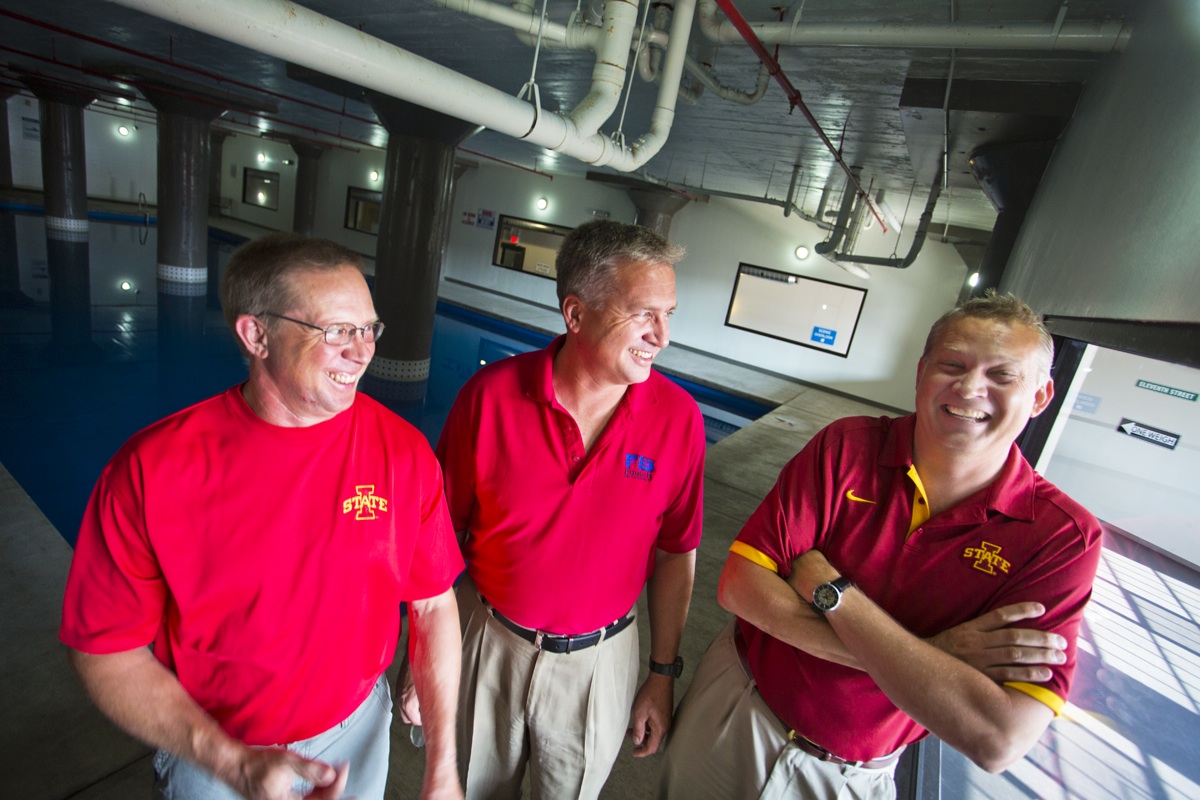
We started our travels in St. Joseph, Mo., where we met up with three brothers – all Iowa State alumni – who work together doing the coolest stuff. What’s that phrase – making a silk purse out of a sow’s ear? That’s kind of what they do. They take old, historic buildings (generally empty and unused) and turn them into the most fabulous places to live.

The three alumni are (left to right, above) Scott, Shawn, and Steve Foutch, collectively and professionally known as Foutch Brothers. Scott (’86 farm operations/animal science), Shawn (’87 civil engineering), and Steve (’88 architecture) grew up in Woodbine, Iowa. Their company is headquartered in Kansas City, Mo., but their renovated buildings can be found throughout the Midwest. We saw three of the buildings in downtown St. Joseph, including a former paper factory that has been completely transformed into apartments and commercial spaces (above, by the indoor swimming pool). More photos and info to come!

09-07-13 dawn KI0A2735

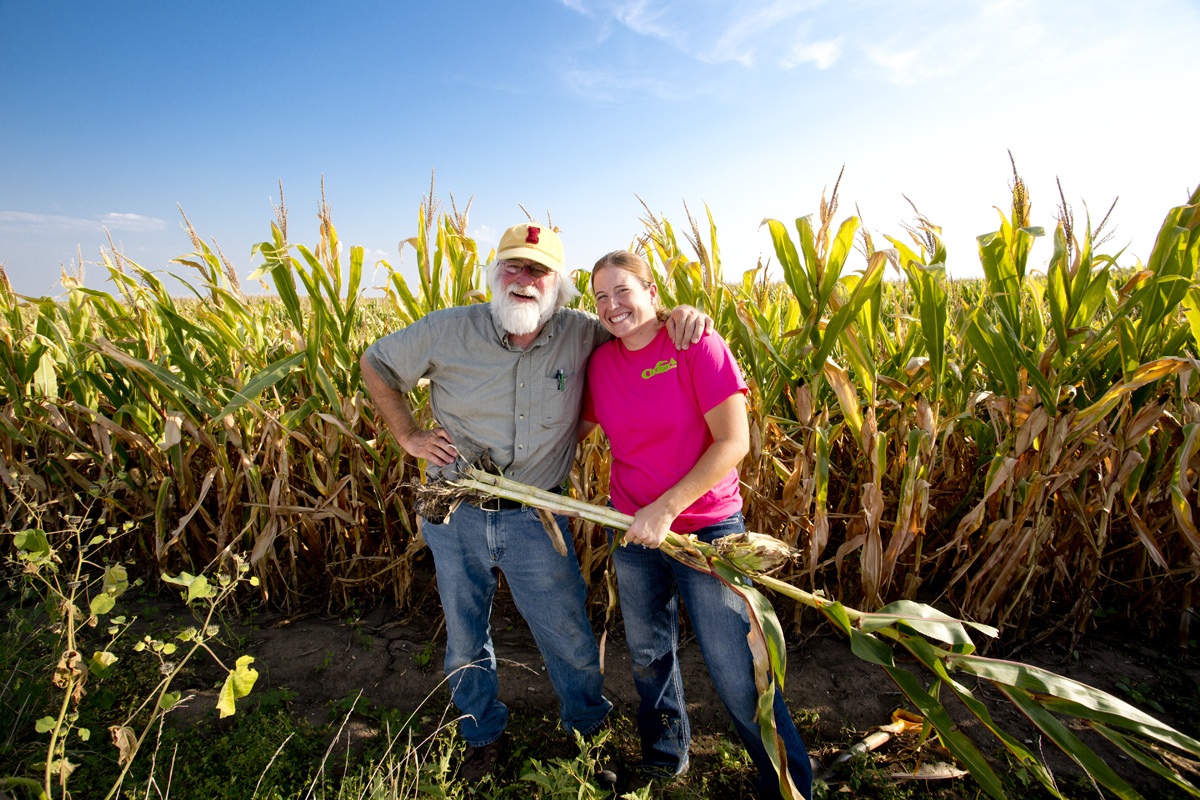
Our next visit was with Dawn Refsell (’01 agronomy, MS ’03 crop production & physiology), a field market development specialist with Valent USA Corp. Besides being a weed specialist and spending most days with farmers in their fields, Dawn has a lot of other interests: She quilts, gardens, helps her husband with his beehives, and rides a Harley. We tromped around with Dawn in (very hot) soybean and corn fields (above) near her home in rural Lathrop, Mo., and she gave Jim and me jars of her delicious homemade salsa before we left.

09-08-13 KRISTA KI0A2876

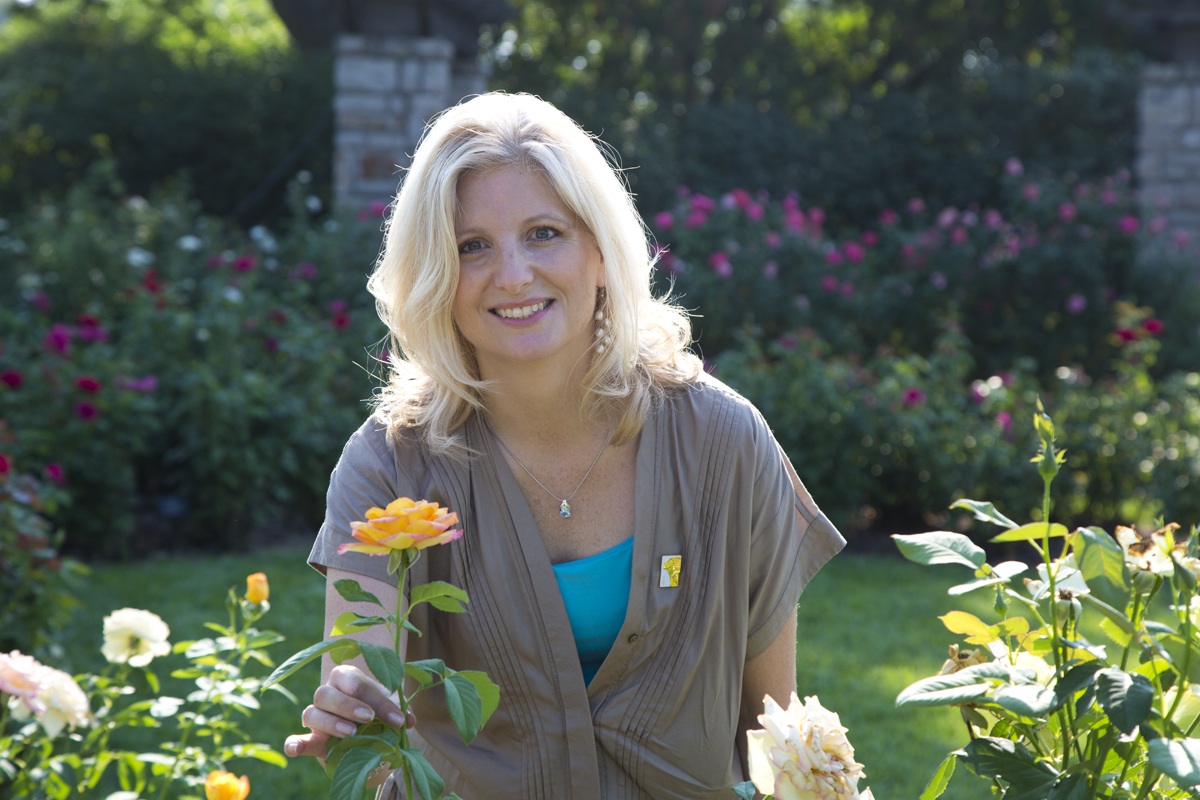
The next morning we met Krista Eilers, MSW, NHP, QRP (’93 social work) at Loose Park, just south of the Country Club Plaza in Kansas City, Mo. Krista is a holistic practitioner and founder of Holistic Healing, and she’s also a yoga instructor. She practices yoga every day and also power-walks, bikes, and sails.

09-08-13 KI0A4371

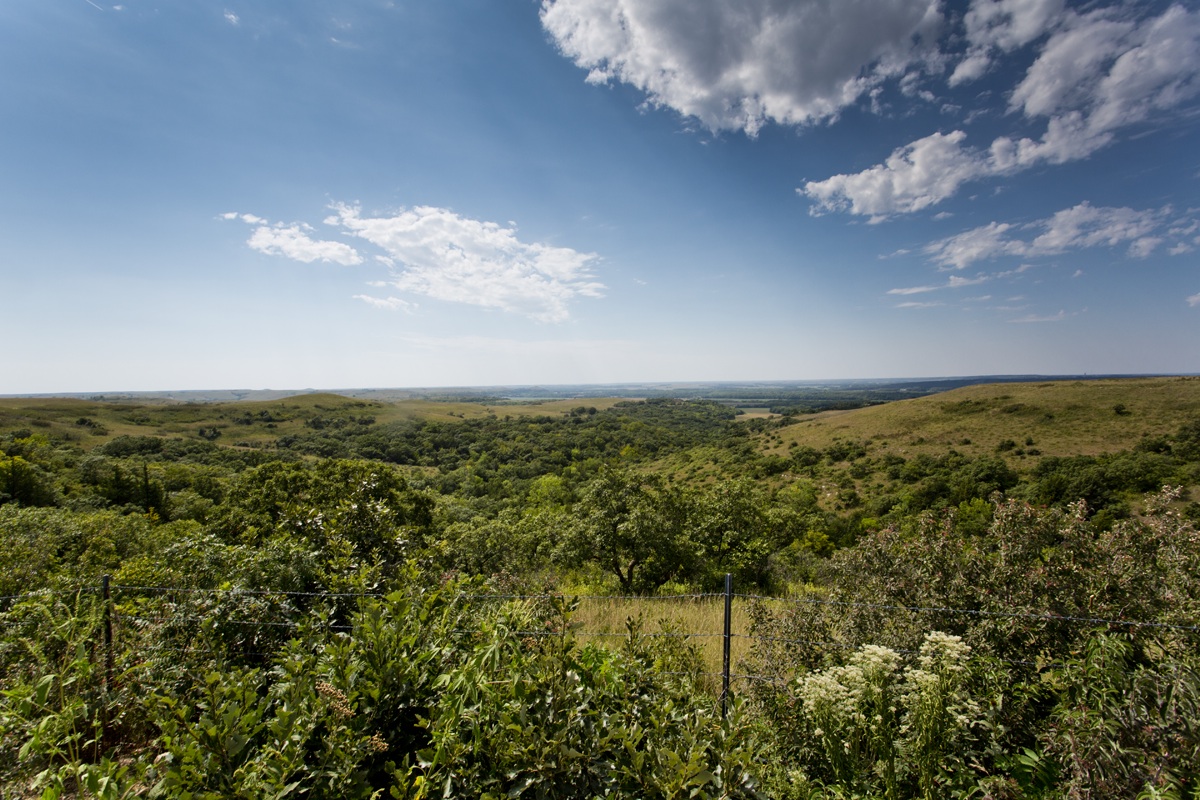
From there, we drove to Manhattan, Kan., where we met Cathy and Mike Mores. I’m sure I will never forget this day because it was SO HOT. But Mike (’99 advertising) and Cathy (’99 art & design) were such good sports. We visited for more than an hour in their air-conditioned home, but the idea was to photograph them hiking at the nearby Konza Prairie. At this point I’m thinking, “Here’s a great idea: Let’s hike up the highest hill in Kansas on the hottest day of the year.” But it worked out really well. Even though it was hot, there was a nice breeze, and we did, indeed, hike up what seemed like the highest hill in Kansas and lived to tell about it.

A highlight of our visit with Mike and Cathy was getting to meet their son, Parker. Parker has an awesome Iowa State bedroom – he’s a true Cyclone fan in the middle of Wildcat Country. He is also one of those serious, wise-beyond-his-years kinds of kids — except that while we were hiking, he kept wanting to pour all of the family’s drinking water on his head. That’s how I knew he was 7 years old and not 35.

Here’s a conversation I had with Parker while we were walking together in the prairie, trying to stay out of the pictures:

Me: So, Parker, your dad tells me you have frogs in the pond in your backyard.

Parker: One frog. It’s a medium-sized frog.

Me: Oh, cool. I like frogs. Does he have a name?

Parker, giving me a scornful look: It’s a wild animal.

Me: Right.

Clearly, this kid is more mature than I am, because I would have named that frog.

Everyone should have a kid as cool as Parker.

09-09-13 ALISON KI0A4417

Our last appointment in Kansas (state No. 46, if you’re keeping track!) was at the Overland Park home of Allison Foss. Allison (’01 child, adult & family services) is a social worker and case manager for individuals with developmental disabilities in Johnson County. She also helps coordinate the Greater Kansas City Myasthenia Gravis Walk, Run & Roll, a 5K run and walk to benefit the Myasthenia Gravis Association of Kansas City. Allison is definitely the kind of Iowa Stater who makes a difference in her community.

As always, I’m anxious to tell you more about these awesome alumni, either on this blog or in print next spring in the special VISIONS Across America issue of the magazine.

Next up: We’re heading to Wyoming, Colorado, and Utah NEXT WEEK. (Who is doing this crazy scheduling??? Oh, I guess I am.) After we get back, we only have one state left!

The great Northwest

5 Sep

08-11-13 SEATTLE KI0A0864

Jim and I recently returned from our travels to the northwestern states, and we’re still in awe of the scenery we saw and the people we met.

It was a big trip: Eleven alumni, four very large states, three national parks, one ocean, several wildfires, four flights to get there and back, and 3,000 miles on the rental car.

First, I just want to say that our flying days are over, and we couldn’t be happier about that. Although we managed to get through this entire project without any flight cancellations or even delays (can you believe that?!) we both still find flying stressful, uncomfortable, and difficult. So we’re happy to have that behind us. Give us a big, honkin’ SUV or a mini-van, and we’ll fill it up with Jim’s photo equipment and hit the road any day!

08-19-13 lolo fire KI0A6760

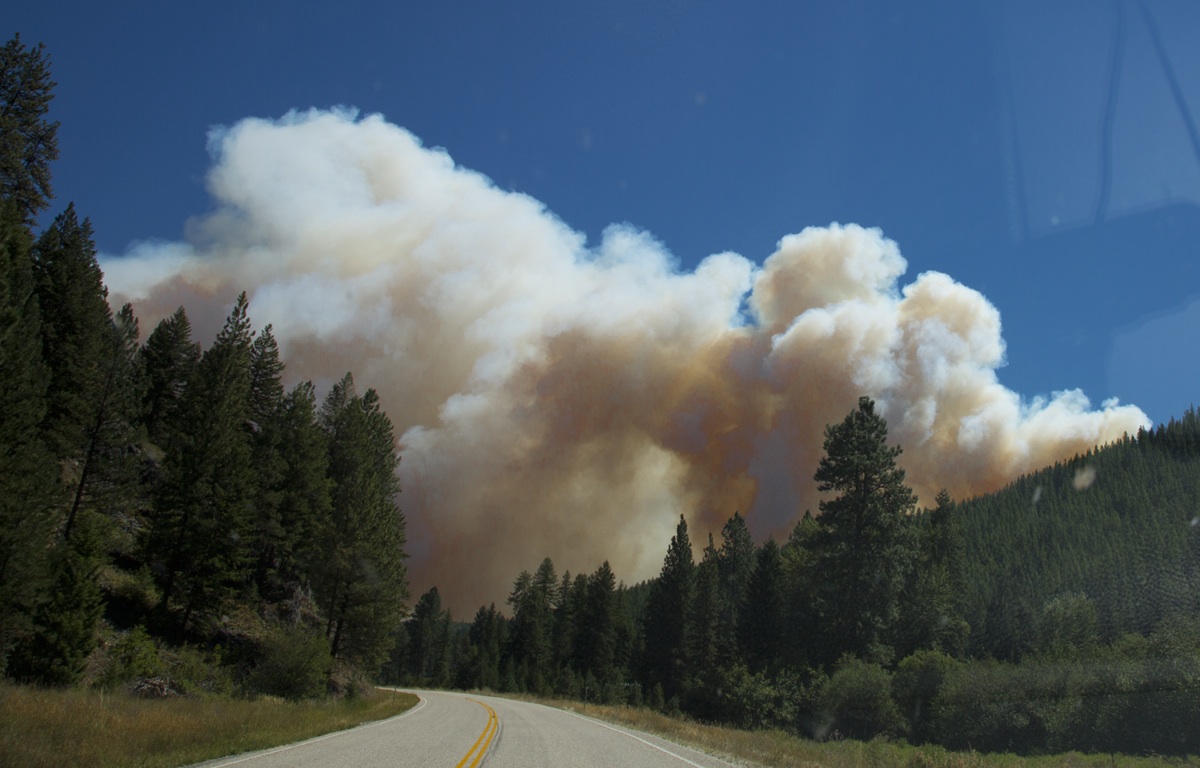
The second thing is that, although we were close to wildfires in Idaho, Montana, and Washington, we are so lucky that we visited when we did. One of the roads we took from Idaho to Montana closed just hours after we drove through, and it remained closed for several days. That fire – the Lolo Creek Complex fire near Missoula (above) – continues to burn. Looking at the map, I’m not sure how long it would have taken to reach our alumni in Kalispell if that road had been closed – it would have been a long way up and around. So, again, it was good timing on our part, but my sympathy goes out to the folks who live in those states, some of whom were displaced from their homes.

And now, let’s introduce you to our IOWA STATERS:

08-12-13 MOHAMMED KI0A1644

WASHINGTON

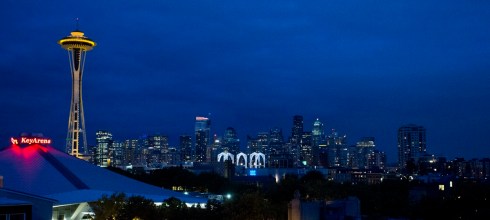
We flew into Seattle and met with three alumni there. The first was Mohammed Alabsi (MS ’07 computer science). Mohammed is a software engineer at Amazon.com, so we met him at one of the many buildings occupied by the giant online retail company. From there, we did the tourist thing: Kerry Park (for the best view of the Seattle skyline), Pike Place Market, and the original Starbucks. It was a beautiful day, and Mohammed proclaimed it the Best Monday Morning Ever. (We thought so, too.)
08-12-13 SCOTT IMG_7188

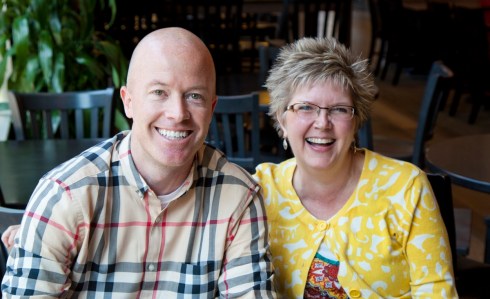
We couldn’t be in Seattle without checking in with Scott Stanzel (’95 journalism & mass comm), last year’s ISU Alumni Association Board of Directors president. Scott also works at Amazon.com, leading the company’s consumer public relations group. It’s fun to talk to Scott, because not only does he have a cool job in a cool city, he’s also the former deputy White House press secretary for President George W. Bush. So he has lots of great stories to tell. Plus, he and his wife, Priscilla, just had a baby girl, Millie, and we got to see pictures of her. We had lunch with him just a few blocks from his office at Specialty’s, a counter-service restaurant so high-tech that Jim and I could not figure out how to order our meals at the computer and had to be helped by a human being at the counter.
IMG_7533

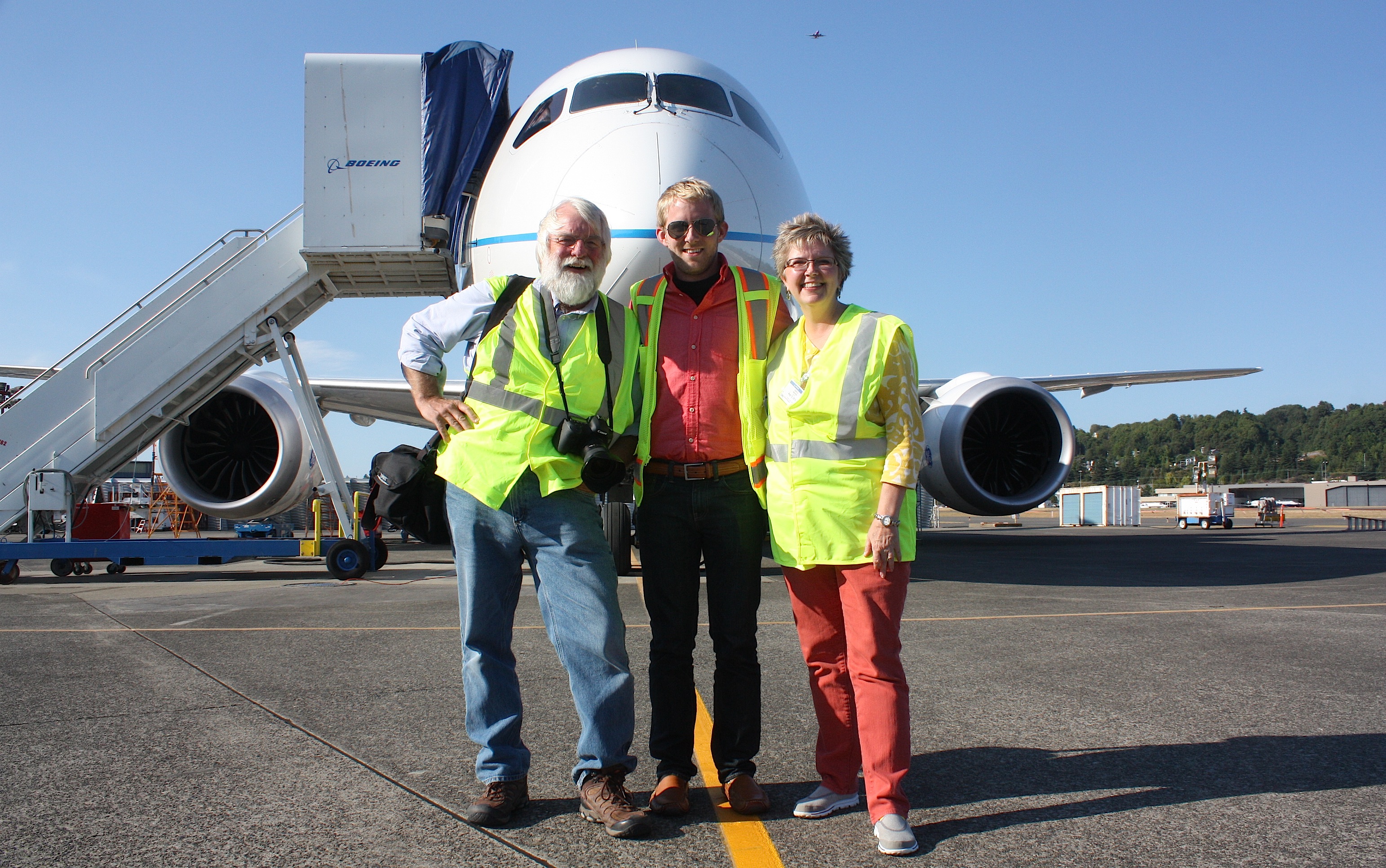
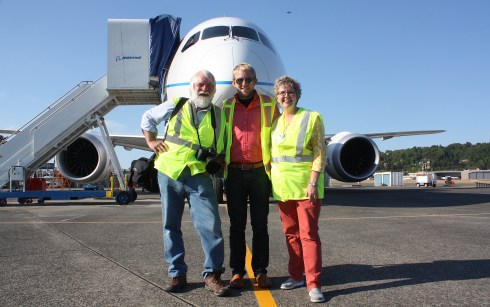
Our last appointment of the day was with Matt England (’11 aerospace engineering) at Boeing. Talk about a cool job! Just two years out of school, Matt is a flight test engineer on the 787 Dreamliner, which means he gets to fly, travel, and run tests on what is truly a state-of-the-art aircraft. Jim and I were allowed incredible access to the plane and got to see where Matt works when he flies. While Jim was photographing Matt in the back half of the plane, Adam, the flight test communications guy, gave me a tour of the cockpit. Very impressive!

08-13-13 WILWERT KI0A2650

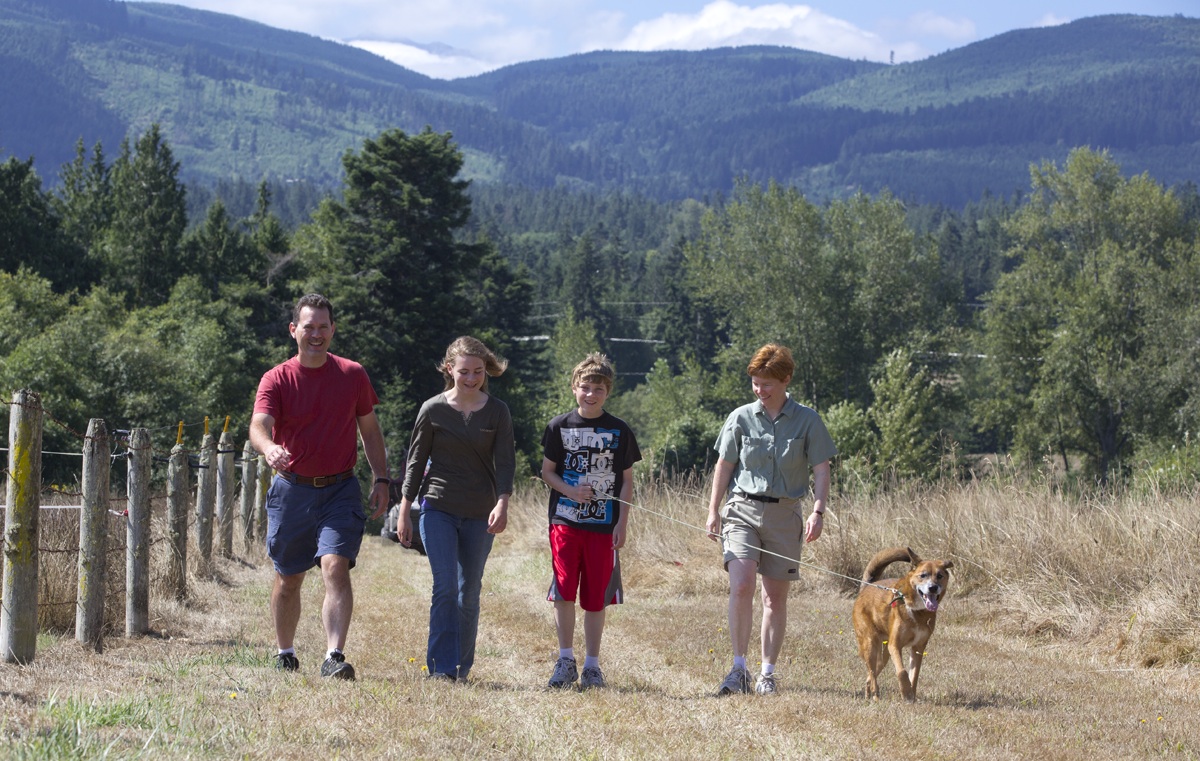
The next morning, Jim and I checked out of our Seattle hotel and drove north to the town of Edmonds, where we boarded a ferry (car and all) to cross Puget Sound to the small community of Kingston. After an hour’s drive, we were in Sequim, the home of Jason and Tracy (Blough) Wilwert. Tracy and Jason both graduated with degrees in biology in 1991, and both are practicing physical therapists. We met their kids, met their dog, and went with them to Olympic National Park, where Jim took a gazillion pictures of them.

Afterwards, we had dinner with the Wilwerts at a cute Italian restaurant in nearby Port Angeles. And then Jim and I stayed at a motel on the outskirts of town that can only be described as the Bates Motel, complete with creepy proprietor and squawking birds. But we survived, and it was actually very clean and comfortable and even had free wi-fi.

OREGON

Our travels from Washington to Oregon can only be described as Day 1 of many Dramamine Days. The route (Hwy. 101) was beautiful, but very curvy and hilly. This became a pattern on this trip, so I was glad that I packed my pills or I would have been carsick from the get-go. (I’m not sure Jim would appreciate it if I threw up in the front seat of the rental car.)

08-14-13 MOUNT ST HELLEN KI0A3602

En route to Beaverton and our first appointment, we were drawn in by a brown National Park sign along the road. Though the mountain (above) is many miles away, the Mount St. Helens National Volcanic Monument visitor center was right off Interstate 5, so we took a quick detour to check it out. Jim and I both have memories of the volcano eruption in May 1980 – I specifically remember it because it was one week before I got married, and we had an ash cloud over our wedding reception. The eruption was a horrible tragedy, but the science behind the event is so fascinating that we got sucked into a ranger talk for almost half an hour before tearing ourselves away because we needed to get going.

IMG_7702

In Beaverton, we met with alumna Gina Ambrose at Nike. Gina (’08) was a triple major in marketing, international business, and French at Iowa State. She has had awesome jobs since graduation, working both at The Gap in San Francisco and Nike near Portland. She’s very involved in activities in Portland in addition to working on the Nike marketing team for the website Nike.com, a job she says she loves. We drove with Gina out to the Oregon coast – which is about an hour and a half away but so worth it. Jim photographed Gina on one of the most picturesque beaches along the Pacific coast: Cannon Beach.

I have a bit of a water phobia since I don’t know how to swim, but I was brave and waded through the ankle-deep water to the “best” photo location AND slogged back through the above-knee-deep water later, after the tide began to come in. (I shudder to think what I would have done if we’d waited much longer.)

It also rained rather hard on us toward the end of the shoot, so we were wet from the ocean, wet from the rain, and covered with sand by the time we struggled back to paved ground. It was sort of cold, too, so we found a neighborhood coffee shop where we dried off, warmed up, drank lattes, and cleaned up Jim’s cameras.

Gina was a good sport through the whole thing. I know I would NOT have wanted my picture taken in the rain. She even changed clothes for us in a public bathroom, which is truly above and beyond.
08-15-13 PORTLAND KI0A4766

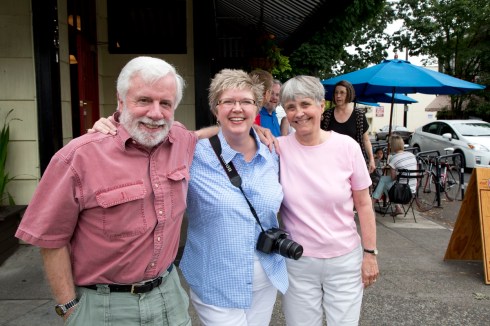
Our headquarters for the next two nights was the Park Lane Suites in Portland. As it turns out, this was not at all far from the home of Mike Whiteford, retired dean of ISU’s College of Liberal Arts and Sciences, and his wife, Patty. My husband, Dave, worked for LAS for many years, so I became good friends with Mike and Patty. Jim and I met them for breakfast the first morning we were there, and it was great to catch up with them. Retirement – and proximity to children and grandchildren – definitely agree with the Whitefords.

IMG_7767

The city of Portland, it turns out, is home to what is widely considered the most authentic Japanese garden outside of Japan. And Iowa State has a connection to that garden: Bill Findlay (’66 architecture). Bill had a huge role in the creation and maintenance of the garden as a member of the Oregon Japanese Garden Foundation board. And he’s been a member of a dozen other boards and involved with a wide variety of Portland civic and performing arts groups.

He gave us a tour of the Japanese garden and then fed us dim sum at an authentic Chinese restaurant in Portland’s Chinatown area. We finished at the Portland Center for the Performing Arts (above). So we had a very fun day with Bill.
08-16-13 COLUMBIA RIVER KI0A5643

IDAHO

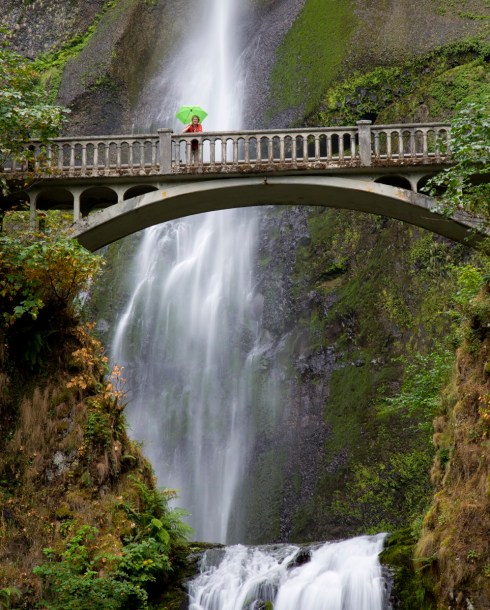
The next day, we packed up and left Portland for points east, and basically spent the entire day in the car. But before you feel sorry for us, consider this: The first part of our route was along the Historic Columbia River Highway. Have you been on this highway? If not, do yourself a favor and take this drive. We took it from Corbett to Dodson, and it was spectacular. (I was lucky enough to see this road once before, in the fall, and the foliage was gorgeous.) We didn’t have a lot of time, but we stopped at Shepperd’s Dell, with its historic bridge, lovely vista, and waterfall. We stopped again briefly at the Wahkeena Falls. And then, of course, we stopped again at Multnomah Falls, one of the most scenic areas in all of the Northwest. It was raining lightly, and we were lucky to be there without a hundred thousand tourists. Jim photographed me on the iconic bridge holding my green umbrella. This is photo of myself that I really treasure. It’s a classic.

After that, it was pretty much drive, drive, drive … over a mountain range and through the high desert … eating lunch in the car… taking lots of Dramamine. (I could be this company’s spokesperson.) This fun, fun day ended with Jim and me doing laundry in Boise, Idaho, a city with 100-degree heat and smoke-filled air. But at least we had clean clothes at the halfway point.

08-17-13 CARTER KI0A6099

Very early the next morning we met with Carter Niemeyer. Carter is one of the first people I had my eye on to feature in this 50-state project, so I was really thrilled to finally be able to meet him face-to-face (or face-to-chest, as he is more than a foot taller than me). Even in retirement, Carter (’70 fisheries & wildlife biology, MS ’73 wildlife biology) is one of the country’s foremost wolf specialists. He’s worked primarily in Montana and Idaho, and he helped capture the wolves that were famously introduced to Yellowstone National Park and Idaho in the 1990s. He took us more than an hour north of Boise to wolf country, and I can’t wait to tell you more about him. (Let me just say that I was not disappointed.)

08-18-13 RENEE IMG_8049

We spent the rest of the day (when I wasn’t holed up in my air-conditioned hotel room fighting off a mild illness) scouting locations to photograph Renee (Schmitt) Shang. We met up with her and her family the next morning in Boise – which, as it turns out, has lots of cool places to do photo shoots. We went with her (along with her husband, Mike, and 18-month-old daughter, June) to city parks, the Boise River Greenbelt, and near the state capitol building. Renee (’05 computer engineering) is a lead product engineer for Aptina in Boise. And June stole my heart.

This afternoon we drove as far as McCall, Idaho, a terrific place with a lovely lake and a fantastic state park nearby. Our Super 8 out on the highway had views of neither, but hey, we did get to rub shoulders with the people there for the big gem and mineral show.

MONTANA

We’re now on Day 9 if you’re following along, and it’s another full-day drive, this time to Kalispell, Mont. Like the day we left Portland, the drive north from McCall was just spectacular, with mountains and the white-water rapids of the Payette River intermixed with pastoral scenes of grazing cows and bales of hay.

We stopped for lunch at the surprisingly wonderful Lochsa Lodge on the Idaho/Montana border. This was our first introduction to huckleberries, but it would not be our last, as this fruit is a popular local delicacy in western Montana.

And then, on Hwy. 12 in Montana, we encountered the aforementioned Lolo Creek Complex wildfire, which scared me to death because it was so close. But we made it through, turned north at Missoula, and left the fire behind.

08-20-13 IMG_8406

Our destination for today was Kalispell, but we stopped several times en route to scout for photo locations along Flathead Lake – a very big, very blue lake surrounded by scenic small towns and half a dozen state parks.

08-20-13 JUSTIN KI0A6905

The next morning we had coffee at a diner in Somers, Mont., with Justin Ahmann (’05 civil engineering). He and his wife, Laura, and their two young sons live in Kalispell, where he’s the director of engineering for APEC engineering. He told us some interesting facts about water rights issues in Montana that are very different from the issues facing Iowa. Jim photographed Justin near Flathead Lake.

Jim and I had quite a bit of time to kill before our late-afternoon appointment, so we ate a very slow sandwich very fast in Bigfork, Mont. (long story), bought some delicious Flathead cherries from a roadside stand, scouted more locations, shared a piece of peach pie a la mode at a weird restaurant, and chilled out watching people swim and play at Lakeside’s Volunteer Park.

08-20-13 SANDY KI0A7347

Finally, it was time to meet with veterinarian Sandy Anderson (’03 DVM). To streamline the interview process, I rode with “Dr. Sandy” and her husband, Clint, in their truck (with their adorable dogs, Teddy and Raisinet) while Jim followed in our rental car. We drove an hour-plus to one of the Andersons’ favorite places – Glacier National Park – and photographed Sandy as the sun was setting.

I will be telling you more about these alumni in the coming weeks and months, and some will be featured in the special spring 2014 VISIONS Across America edition of VISIONS magazine.
08-22-13 KI0A8271

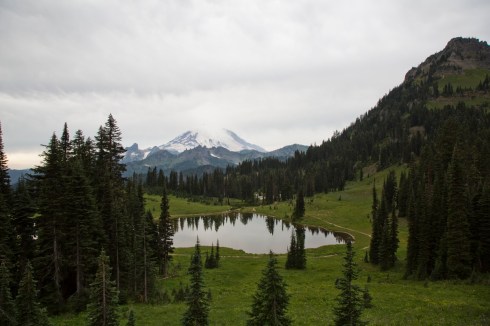
Oh, I guess I should mention that Jim and I had to DRIVE BACK to Seattle to return the rental car (another full-day’s drive), because to drop off a rental car in Montana was going to cost us $3,000. The good news about driving through western Montana and the “neck” of Idaho, and all the way across the state of Washington was that it didn’t take us as long as I anticipated, and we had time to take a small side trip to Mount Rainier National Park. THAT was a treat.

Wrestling with faith

6 Aug

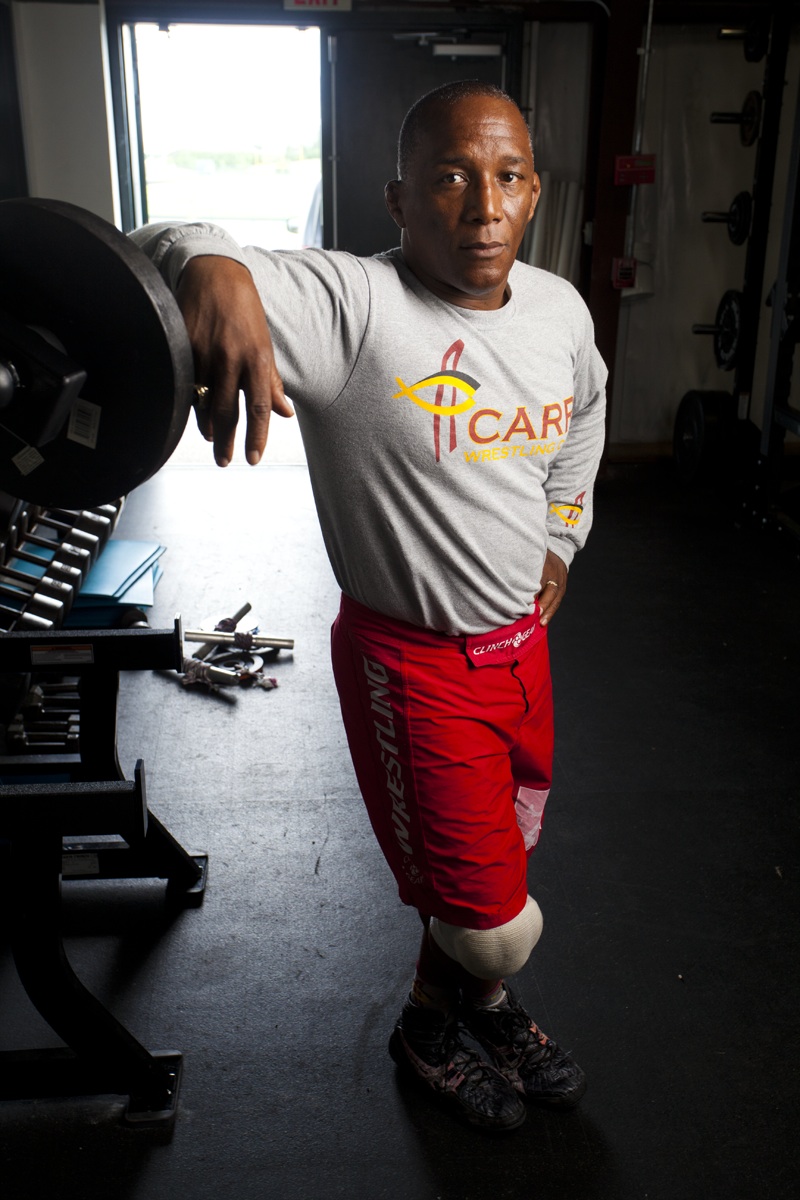
06-28-13 CARR IMG_5094

Nate Carr (’85 sociology) grew up in a big family with big dreams. Nate was the eleventh of 16 children (he jokes that his parents embraced the notion of “be fruitful and multiply,” and he’s grateful they didn’t stop after having 10 kids.) Five of those kids, including Nate, became All-American wrestlers (an NCAA record), and two competed in the Olympics.

As a wrestler for Iowa State, Nate won three individual national championships (1981-83). He won a bronze medal at the 1988 Seoul, Korea, Olympics, outscoring his opponents 67-7. He was inducted into Iowa State’s Athletics Hall of Fame in 2000.

Nate’s wrestling career has continued, as an assistant wrestling coach at West Virginia University, as head of youth wrestling at Team Prodigy, as a wrestling coach at Jones County, Ga., High School, and at camps and clinics across the country. He currently manages, with his wife, Linda, his own wrestling clinic, Carr Wrestling Club near their home in Centerville, Ohio. Their oldest son, Nate Jr., was an outstanding wrestler at Iowa State.

Nate joined the ministry when his family lived in Georgia, and he draws parallels between being a pastor and being a coach.

“My life’s mission is to produce champions in this life and for all eternity,” he says.

He worked with inmates as a prison minister and has spent much of his career working with youth. He performed the weddings of many of his athletes.

“I always threatened them that if they didn’t act right, I could put them in a headlock,” he jokes.

Nate continues to stay in shape – he rides his bike and lifts weights every morning – and to minister to young athletes at every opportunity.

“I’m a professional encourager,” he says, adding that when he works with youth he always focuses on the positive, not the negative. “Having someone who encourages you is huge. You can learn from your mistakes and use that as a catalyst to take you to the top.”

The home stretch

4 Aug

With 40 states completed, the travel portion of VISIONS Across America is winding down. Except that it doesn’t feel winding-downish at all. It feels chaotic and stressful. And breathless and fun and exciting. Because the travel to our last few states in August and September is going to be packed crazy-tight.
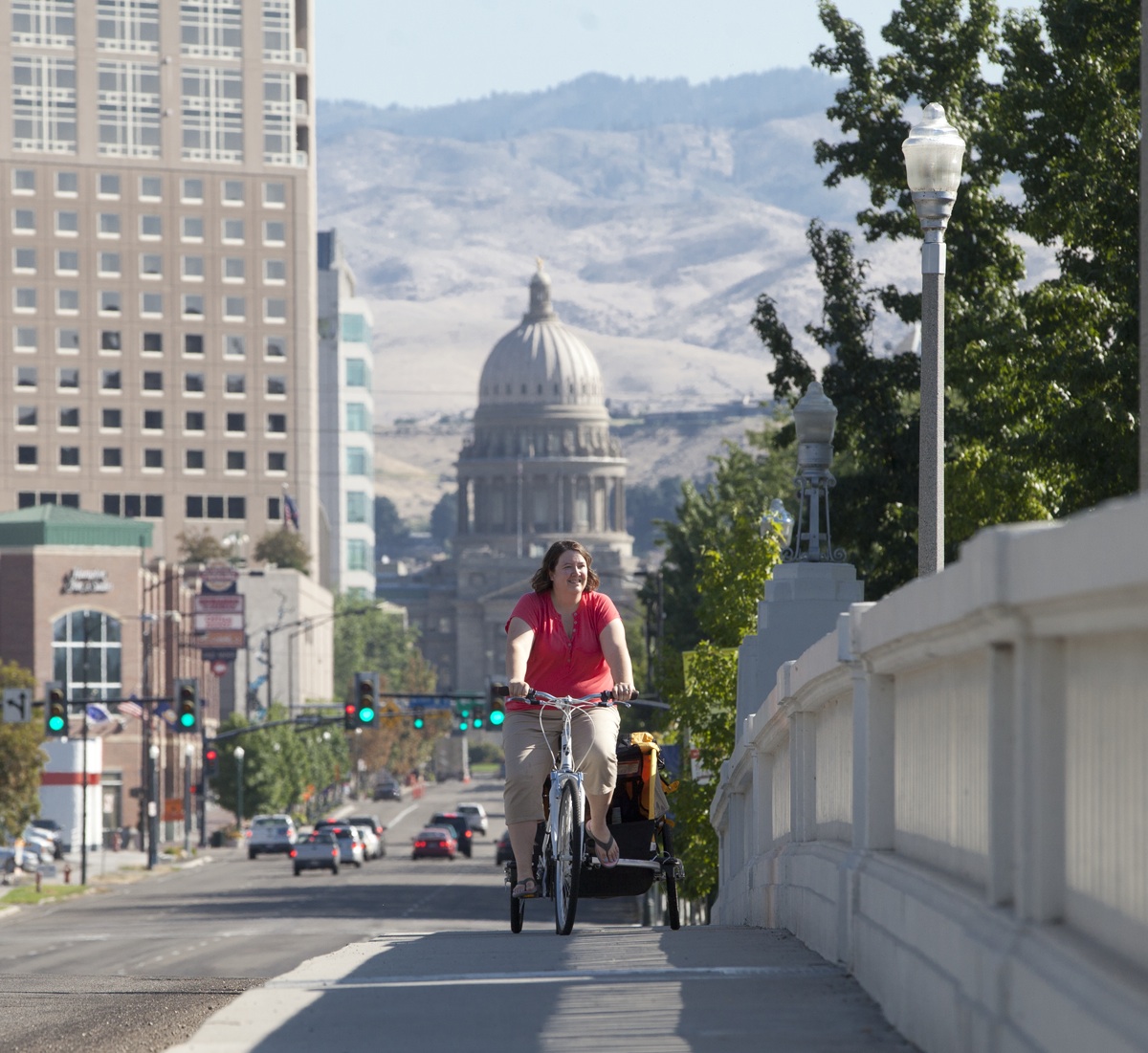
It’s always nice to come back from one trip and have a little time before the next one. But right now I’m working on the next three trips all at the same time. We’re flying off in a week to Seattle, Wash., our jumping-off place for four states: Washington, Oregon, Idaho, and Montana. That’s a lot of land to cover, but we’re really excited about this trip. We’ll be in two national parks (Olympia and Glacier), driving through some spectacular parts of the country, and visiting some of the greatest cities in the Northwest as we meet with alumni in each state.
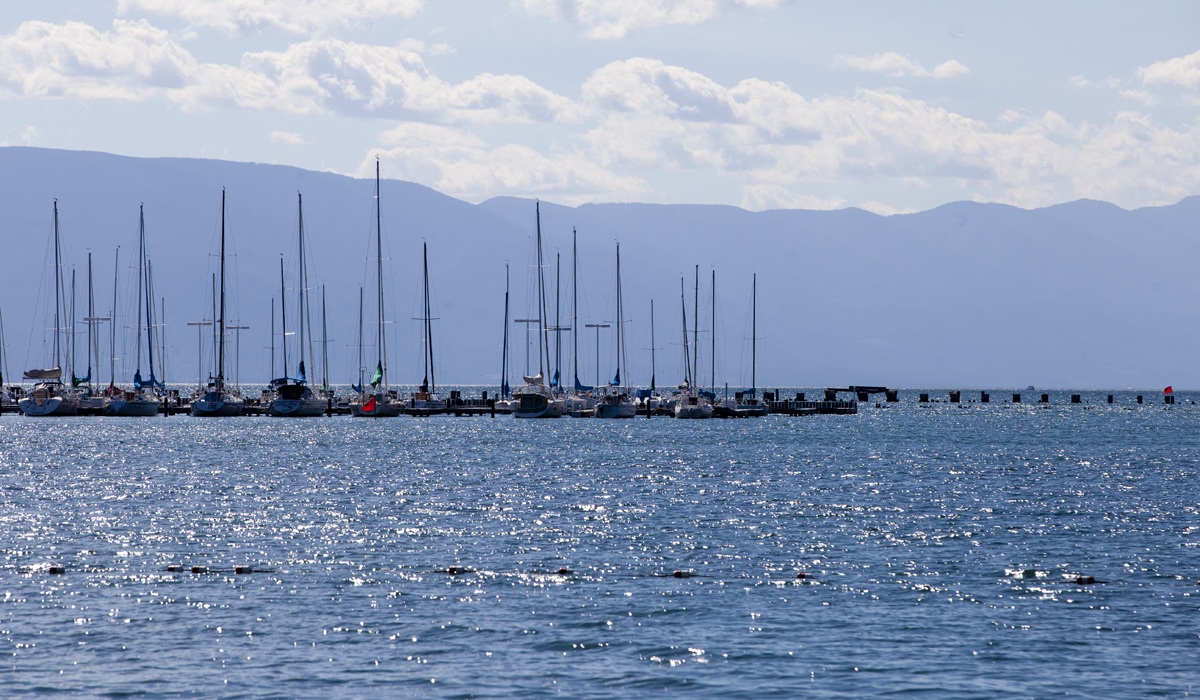
We’ll be back in Iowa for a couple of weeks before heading off for a quick and easy driving trip to Missouri and Kansas. And then we’ll be in our offices for just one week before starting our last major travel: Wyoming, Colorado, and Utah. Talk about saving some of the best states for last: This will be another drive through beautiful national parks and great American countryside. We have some great alumni lined up for this trip, too.

After we return from that trip at the end of September, we’ll have 49 states complete. Guess which state will be left?

———————

I’ve talked to lots of people during this VISIONS Across America project, and they’ve asked a lot of questions about our process and logistics. They’ve asked about flying vs. driving (driving is simpler but obviously takes more time), whether Jim and I get along when we travel (mostly yes), and how we select the alumni we feature (I have a long answer for that one, because it’s complicated).

But the three questions I get asked the most are:

  • Have you been to Alaska and Hawaii? (Yes; and we surprise people by saying that we preferred Alaska.)
  • What was your favorite state? (Alaska, followed by Maine…but we have really loved traveling to all the states.)
  • Who are you going to feature in Iowa?

I STILL don’t have an answer to the last question, and we’re getting down to the wire. More than 90,000 Iowa State alumni currently live in the state of Iowa. That makes Iowa both the easiest and the most difficult state to choose. I’ve received a lot of suggestions and nominations and advice…but most people just say, wow, that’s gonna be a tough one.

Let me know if you have any ideas!

Banjo(y)

2 Aug

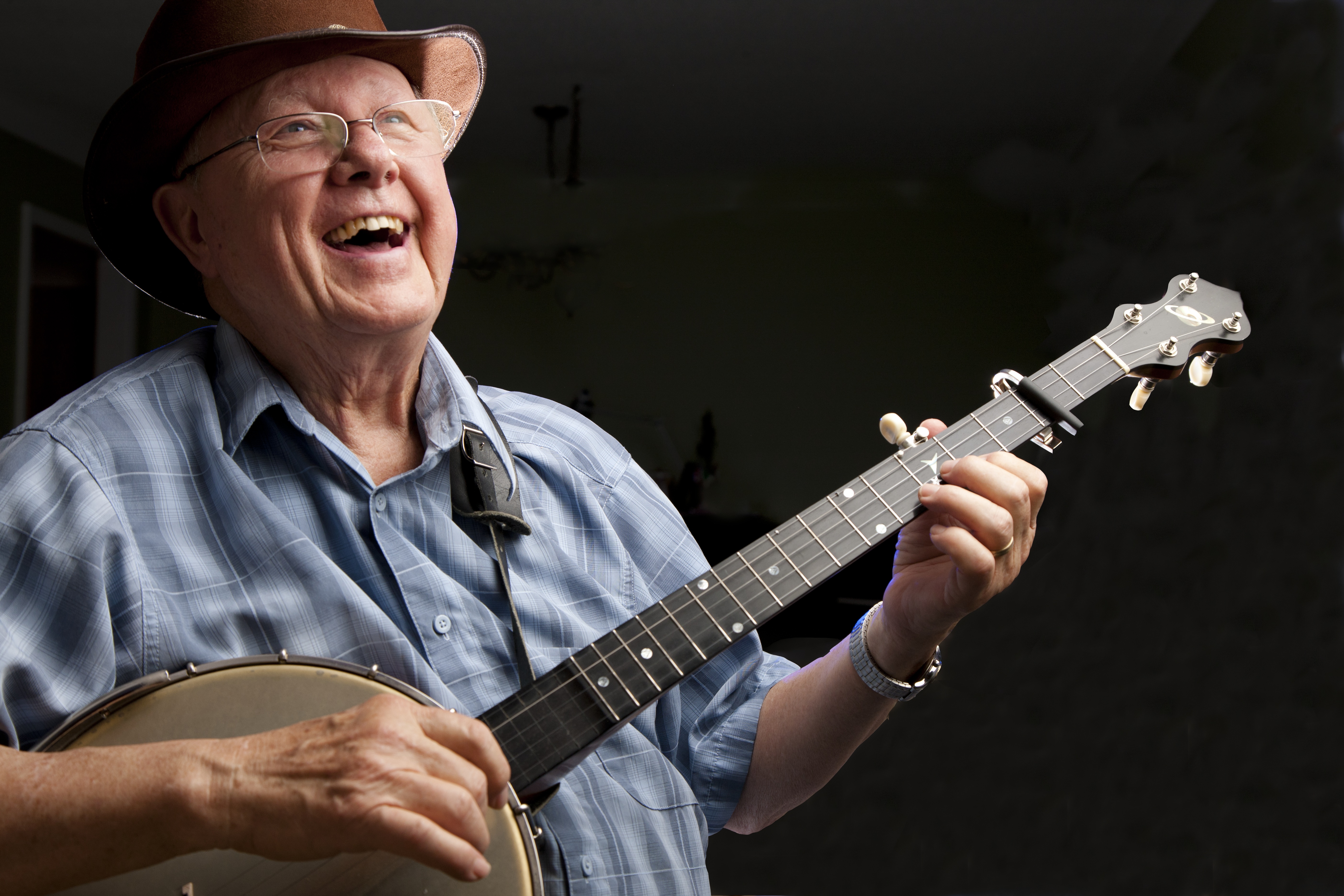
06-26-13 DON SOMERS 173F7719

Something magical happens when Donald Somers picks up a banjo.

He still owns the first banjo he ever bought – “a cheap one,” he says, for $125 – though it’s now sharing space with other less-favored banjos beneath the bed. The ones he plays regularly can be found in his music room: “The smallest room in the house with the most stuff in it.”

Don (’58 ag journalism) first played the banjo in 1978 when he was married to a folk singer.

“I was in my early forties, so I had a lot of catching up to do,” Don says. “I had played in my high school band only until I learned that football players got the girls.”

He found a “very patient” banjo instructor, and he practiced every night. He eventually joined a bluegrass band called Pickin’ Up Speed and for 10 years “played gigs nobody else wanted” in the Milwaukee area

Don and his wife split up, but he maintained his passion for the banjo. In 1996 Don married his current wife, Sylvia Maiuri, a professional pianist and piano teacher, and moved to Indianapolis.

He also changed musical directions, switching from the bluegrass style of play to the old-time clawhammer style. The style gets its name from the way you hold your hand, Don explains. It’s also called hammering, flailing, or thumping.

“I love the sound of the banjo,” he says. “I love the people you meet when you’re playing. They’re some of my best friends.”

Don plays in regular jam sessions every Monday night in Bloomington, Ind.,  sometimes with as many as 13 musicians. “The size of the room limits the size of the jam,” Don says.

For his “day job,” Don spent 38 years with the Brady Company in Milwaukee, starting as copywriter and working his way up to creative director, vice president, senior vice president, account supervisor, and board of directors. He began a phased retirement in 1996 and retired completely to a life of banjo in 2000.

A rare vintage

26 Jul

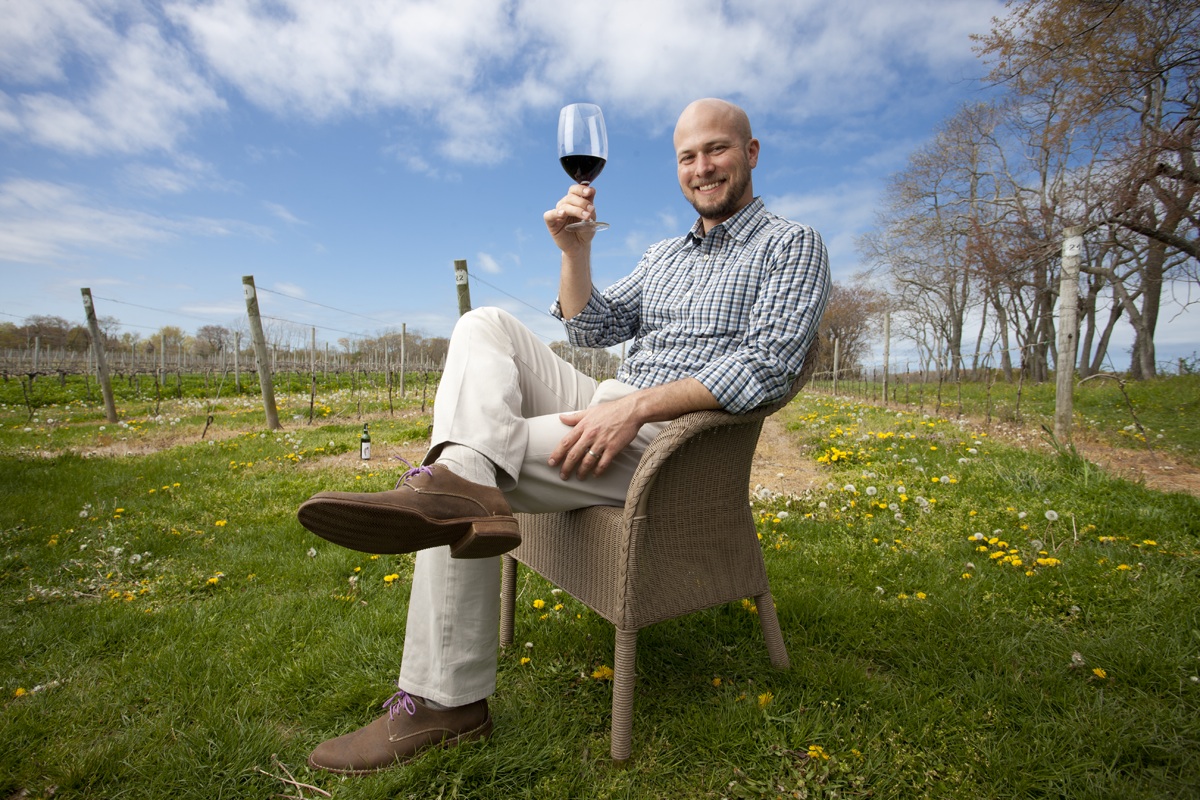
05-06-13 TRENT 173F1240

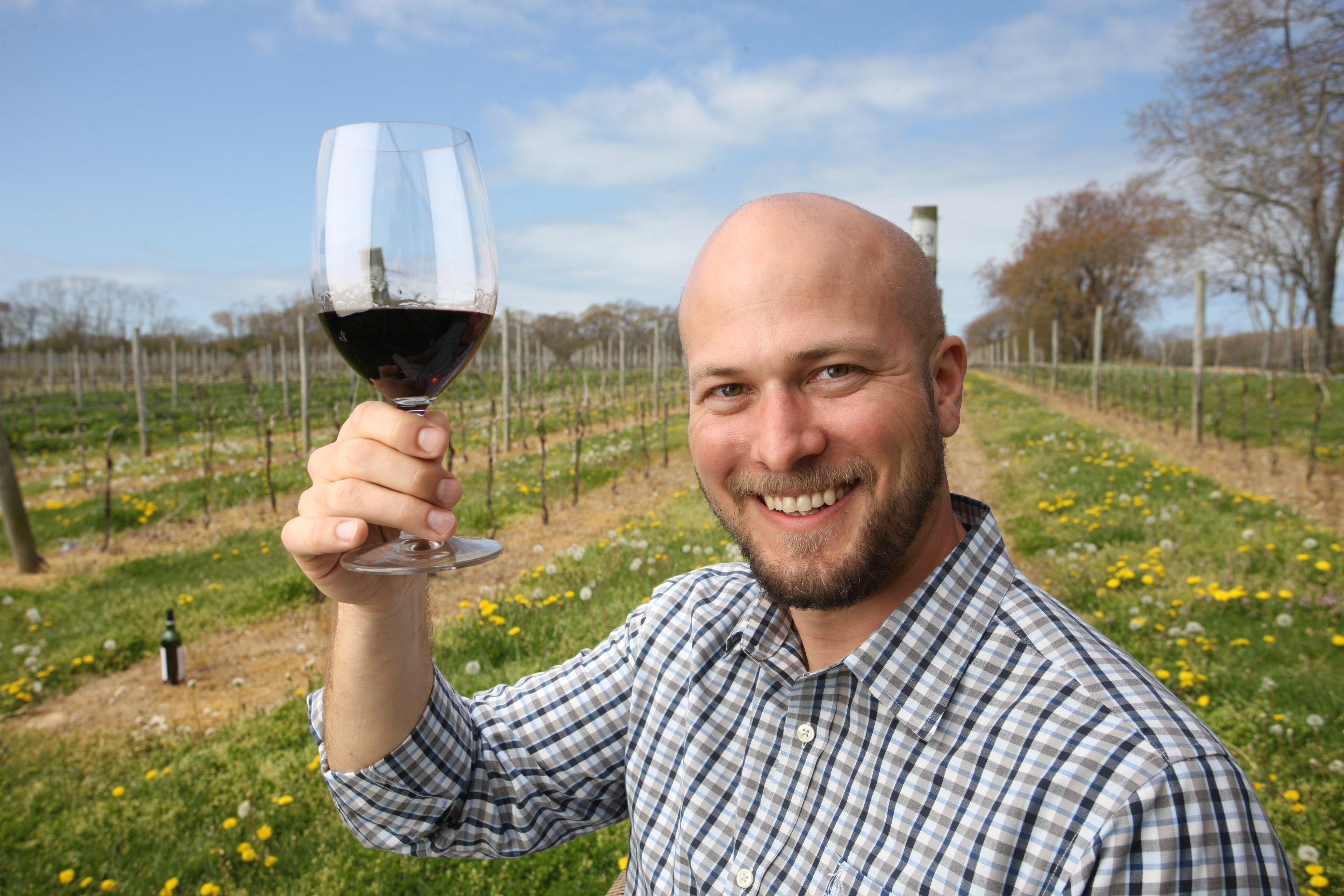
For a moment in time, Trent Preszler represented the most famous wine in America.

And in that moment, all the work and all the sweat to rebuild and transform Bedell Cellars from a little-known Long Island, N.Y., winery and vineyard to a world-class winemaking and event facility was worth it.

Bedell Cellars’ 2009 Merlot was chosen to be served at President Barack Obama’s January 2013 inauguration luncheon, along with a course of South Dakota bison. And suddenly all eyes were on the winery’s CEO.

Trent was interviewed by CBS and ABC news; he attended the inauguration as a guest of New York Sen. Charles Schumer; he even saw his wine on the table during television coverage of the inaugural luncheon.

Sales spiked. Cases flew out the door. The wine sold out in a week.

“The presidential inauguration luncheon was the culmination of 30 years of producing excellent Merlot,” Trent says.

173F1180

THAT TRENT PRESZLER WOULD be involved in a high-value agricultural product was the furthest thing from his mind when he came to Iowa State – and even when he graduated.

Trent grew up on a 10,000-acre cattle ranch in South Dakota.

“I came from no town in the middle of nowhere,” he said. “My parents lost the ranch in the 1980s farm crisis. I was determined not to go to ag school.”

Trent blossomed in an interdisciplinary studies program at Iowa State. He was in the honors program and was a freshman honors leader, vice president of LAS Council, director of legislative affairs for GSB, a member of President Martin Jischke’s VEISHEA review task force, and co-chair of the Lectures Program Institute on World Affairs. He played saxophone in the marching band, delivered the student speech at LAS commencement, and was inducted into Phi Beta Kappa. He was an intern one summer in the White House Office of Science and Technology Policy.

After graduating from Iowa State in 1998, he studied botany at the University of Edinburgh on a Rotary scholarship. In 1999 he moved to New York to pursue a master’s degree at Cornell University.

“I chose New York wine production for my thesis,” he says. “Until then, I had no interest in wine and grapes.”

But he was captivated by the field. He began to truly care about local wines.

After completing his thesis at Cornell, Trent was hired by the owner of Bedell Cellars, one of the most respected wineries in New York. He started in 2002 as the sales manager and was soon promoted to vice president of operations.

The winery is located on a former potato farm on some of the oldest farmland in America – and in what is currently the No. 1 agricultural county in the Northeast. When Trent joined the staff, the facilities were dismal. The owner wanted to “ramp up” not just the winemaking but the facilities themselves in order to entice the New York City wine-drinking population to drive to Long Island for the total experience.

Trent led the renovation of the historic potato barn (built in 1919) into a sleek, sophisticated tasting room; expanded the winemaking operation; restored the guest cottage; and hired new staff.

IMG_6468

IT WAS A TIME of intense personal and professional change for Trent. When he turned 30, he began to ask, “What’s next?” He felt like he’d done much of what he wanted to do for Bedell. What he really wanted was to get a Ph.D.

“I felt unfulfilled, like I hadn’t finished the journey,” he said.

The winery’s owner was supportive, so Trent went back to Cornell to pursue a doctoral degree in viticulture and enology, the study of wine and grapes.

After receiving the degree, Trent was named CEO of Bedell Cellars and made a partner. The winery continued to expand, with an outdoor grand tasting pavilion overlooking the vineyard.

Bedell has, indeed, become a destination. At 80 miles east of New York City, the drive to the North Fork of Long Island takes about two hours, and the journey from urban metropolis to farm country is transformative. Trent describes it as “coming out of a rabbit hole.” (He makes the trip two to three times a week from his apartment in Brooklyn that he shares with his husband, Nick O’Flaherty.)

During the busy seasons – summer and fall – 300-400 people travel to the winery for daily tastings, for which reservations are required. Trent says that winery visitors are Bedell’s bread and butter.

“Sixty to 70 percent of our wine is sold right here,” Trent said. The rest is shipped to customers or sold in New York restaurants.

The winery is turning heads. Wine Business Monthly has named Bedell one of the Top 10 Hottest Small Brands in the world. Bedell’s flagship red blend, Musée, received 91 points from Wine Spectator, the highest score the publication had ever awarded to a red wine from northeastern North America. Bedell was named one of the Top 25 Tasting Rooms in America by Wine Enthusiast.

And now, more about that famous presidential Merlot:

“Every vintage has its own soul,” Trent said. “Each vintage is affected by the weather, the people, the land, the grapes, the yeast, and the sun. The 2009 Merlot was a beautiful wine.”